Some of the links in this post are affiliate links. This means we may earn a small commission if you make a purchase through these links—at no extra cost to you. We only recommend products and tools that we genuinely believe will help you with your Rottweiler.
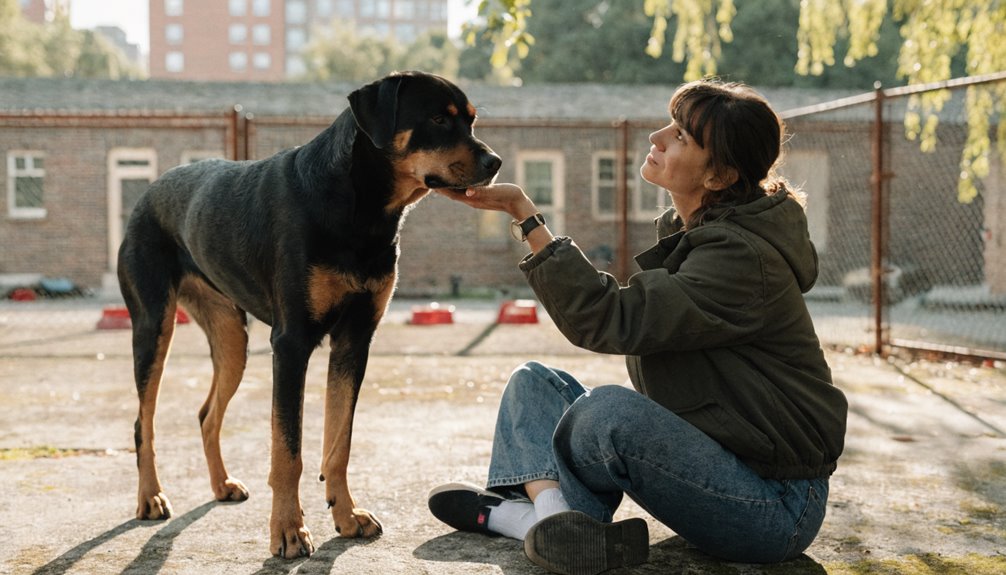
Building trust with a rescue rottweiler starts by recognizing that wariness or fear stems from past abandonment or neglect, not breed temperament. You’ll need steady, predictable reassurance—not dominance—paired with consistent routines, hand-feeding during the first weeks, and immediate rewards for calm behavior. Create a safe retreat space nearby, watch for body language signals like tucked tails or loose posture, and introduce new people and environments slowly over days. Understanding the specific steps behind each interaction reveals why some approaches succeed where others fail.
- Key Takeaways
- Understanding Your Rescue Rottweiler’s Background
- Establish Leadership Through Reassurance, Not Dominance
- Start With a Calm, Predictable Routine
- Create a Safe Space for Decompression
- What Your Rescue Rottweiler’s Body Language Tells You
- Build Your Rescue Rottweiler’s Confidence With Rewards
- Hand-Feeding and Gradual Meal Transitions
- Gradual Introductions: Controlling Pace, People, and Environments
- Recognizing Progress: Celebrating Wins and Staying Consistent
- Frequently Asked Questions
- Conclusion
Key Takeaways
- Establish predictable daily routines (feeding, walking, rest times) to reduce anxiety and build security through consistency.
- Hand-feed meals during the first one to two weeks so your hands become associated with safety and food.
- Reward relaxed behavior immediately within one second to strengthen positive associations and build confidence through praise and treats.
- Provide a designated safe space near family activity where the dog can decompress while sensing your protective presence.
- Introduce new experiences slowly—one every three to five days—with calm leadership and quiet confidence during introductions.
Understanding Your Rescue Rottweiler’s Background
When you bring a rescue Rottweiler home, understanding what they’ve already experienced shapes how you’ll approach building trust with them. Many rescue dogs arrive carrying histories of past abandonment, neglect, or frequent rehoming that directly influence their behavior—fear, shyness, or overprotectiveness rarely stems from inherent breed traits but rather from learned survival responses. Knowing whether your dog was found as a stray, surrendered for behavioral issues, or rescued from neglect provides vital context for their initial wariness. This information guides your handling pace, socialization strategy, and medical assessments.
Your Rottweiler needs time to feel secure in their new environment, which happens through consistent routines, predictable leadership, and patience. Expect gradual behavioral change over weeks and months, not days—their trust builds slowly as they learn their past instability has ended.
Establish Leadership Through Reassurance, Not Dominance
Your rescue Rottweiler needs you to show up as a steady, protective presence rather than a forceful authority figure, because dogs who’ve experienced trauma respond to calm intervention and predictable safety far better than they do to dominance tactics.
When you step in during stressful moments—guiding your dog away from triggers, using a soft voice, and offering reassuring touch—you’re teaching them that you’ll handle threats and protect them, which builds the foundation for genuine trust.
This leadership style works because it combines clear boundaries with attunement to your dog’s signals, so they learn to rely on you for both structure and security.
Be The Calm Presence
A rescue Rottweiler often arrives with unpredictable experiences behind them, so establishing yourself as a calm, reliable presence—rather than a commanding authority figure—becomes the foundation for rebuilding trust. Your steady demeanor signals safety more effectively than any correction or command ever could.
| Your Action | What It Communicates | Result |
|---|---|---|
| Speaking in a low, even voice | Stability and control | Dog relaxes nervous system |
| Moving deliberately, never rushed | Predictability and respect | Dog lowers defensive responses |
| Maintaining consistent routines | Reliability and care | Dog builds security and confidence |
You’ll build trust through predictable routines—feeding, walking, and resting at the same times daily—which convey that you’re dependable. This structure reduces anxiety because your dog learns what comes next. Pair calm presence with positive reinforcement: reward quiet behavior with high-value treats and soft praise, teaching your Rottweiler that your company equals safety, not threat.
Demonstrate Protective Leadership Actions
Once you’ve established yourself as a calm, reliable presence, your Rottweiler is ready to learn that leadership means protection and safety, not dominance or force.
When stressful moments arise—loud noises, unfamiliar visitors, or overwhelming environments—step in with quiet confidence, positioning yourself between your dog and the trigger while maintaining relaxed body language. This teaches your dog that you protect their space rather than punish their fear.
Pair these interventions with firm routines for feeding, walks, and rest, signaling that structure equals security. When your Rottweiler complies with gentle guidance, reward immediately with high-value treats, reinforcing that following your lead brings safety and positive outcomes. This reciprocal trust, built through consistent protective actions, transforms leadership into genuine partnership.
Build Security Through Consistency
Consistency builds the foundation that transforms a rescue Rottweiler’s anxiety into confidence, because predictability signals safety in ways that words cannot. When you establish a predictable daily routine—feeding at set times, walking at the same hour, playing during designated periods—your dog learns the household operates reliably, which reduces stress and builds trust.
Pair this routine with consistent boundaries, like settling on a bed when commanded or waiting before jumping furniture, so your Rottweiler knows exactly what you expect. These clear rules, maintained patiently over time, create positive association between following your guidance and experiencing calm, rewarding outcomes. Your steady presence and unchanging expectations become the reassurance your rescue needs, transforming leadership into a source of security rather than fear.
Start With a Calm, Predictable Routine
You’ll build trust most effectively by creating a routine where your Rottweiler knows exactly when feeding, exercise, and rest happen each day, which reduces anxiety and allows them to relax instead of constantly wondering about their next meal or walk.
Feeding at the same times (like 7–8am and 6–7pm) and taking daily walks in consistent windows gives your dog predictability, and this structure actually makes them feel more secure because uncertainty is what triggers stress in rescue dogs.
Establishing Daily Feeding Schedules
Establishing a regular feeding schedule forms one of the most powerful tools for building trust with a rescue Rottweiler, since predictable routines reduce anxiety and signal safety to a dog who may have experienced neglect or inconsistency in the past.
You’ll want to feed your new dog at the same times daily—typically 7:00 AM and 6:00 PM—creating a structure that your dog can rely on, which builds confidence over time.
This consistency reinforces that you’re dependable and that food arrives reliably, transforming mealtimes into anchors of stability.
Start by hand-feeding small portions during the first week or two to establish trust before shifting to a bowl once your Rottweiler settles into the routine.
Consistent Exercise And Rest
While regular mealtimes anchor your rescue Rottweiler’s sense of safety, a predictable exercise and rest schedule builds the physical and emotional stability that allows your dog to relax into trust.
Begin with two short, calm walks of 10–15 minutes each daily during the first 2–4 weeks, providing gentle exercise without overwhelming your dog. Schedule walks at the same times each day, e.g., 7:00 a.m. and 6:00 p.m., alongside consistent rest periods at noon. This predictability reduces anxiety and creates reinforcement through repetition.
After each walk, include a 20–30 minute low-impact enrichment session using puzzle feeders or scent games to mentally tire your dog.
Make certain your Rottweiler receives 12–14 hours of undisturbed sleep daily, which supports emotional regulation and trust-building.
Create a Safe Space for Decompression
A rescue Rottweiler needs a designated retreat where decompression can happen without pressure or interruption, and this safe space forms the foundation of your dog’s emotional recovery during the adjustment period.
A properly sized crate or quiet corner allows your dog to sit, stand, turn around, and lie fully stretched, creating room for comfortable movement without excess space that breeds anxiety.
Position this safe space near where you spend time—your bedroom or living room corner works well—so your Rottweiler senses your presence while maintaining the option to withdraw when overwhelmed.
Stock the area with familiar-scented blankets, durable toys, and puzzle toys that encourage positive associations.
Maintain predictable routines around feeding and rest times, reinforcing that this retreat reliably offers security and stability.
What Your Rescue Rottweiler’s Body Language Tells You
Your rescue Rottweiler communicates constantly through body language, and learning to read these signals gives you crucial information about how your dog feels and what they need from you.
A tucked tail, lowered body, and flattened ears signal fear or stress, indicating you should slow down interactions. Conversely, a loose posture and relaxed mouth show comfort and receptiveness to bonding.
Avoidance behaviors like head turning or walking away mean you must give them space to approach on their terms. Raised hackles, stiff stance, and rigid tail suggest high arousal requiring distance and calm leadership.
Subtle appeasement signals—lip licking, yawning, slow blinking—indicate your dog is self-soothing, so respond with soft movements and reduced stimulation. Understanding these patterns supports effective dog training and builds the consistency your rescue needs.
Build Your Rescue Rottweiler’s Confidence With Rewards
Once you understand what your rescue Rottweiler’s body language reveals about their emotional state, you can use that awareness to build their confidence through strategic rewards. Reward every instance of relaxed behavior—soft eyes, loose tail, voluntary approach—within one second to strengthen positive associations. This immediate reinforcement teaches your dog that calm choices earn good things, which builds trust and reduces separation anxiety over time.
Hand-feed meals during the first one to two weeks so your dog learns your hands predict safety and food. Aim for a three-to-one reward-to-correction ratio, preferring rewards exclusively. Short, frequent training sessions of three to five minutes repeated three to five times daily create success experiences without overwhelming your dog, establishing consistency that supports long-term confidence growth.
Hand-Feeding and Gradual Meal Transitions
Hand-feeding meals during the first one to two weeks—or longer if your dog shows signs of anxiety or resource guarding—creates a direct connection between your hands and safety, teaching your rescue Rottweiler that you’re a reliable source of good things rather than a threat to their food.
Dog owners should keep sessions short, around three to five minutes, two to three times per meal, allowing your Rottweiler to eat at their own pace without pressure.
Over one to three weeks, gradually shift by moving food from your hand into a bowl you hold, then setting it down as your dog approaches.
This measured approach takes time but builds consistency, reducing guarding behaviors while strengthening positive reinforcement around mealtimes and your presence.
Gradual Introductions: Controlling Pace, People, and Environments
As your rescue Rottweiler settles into hand-feeding routines and begins to associate mealtimes with safety, introducing new experiences at a controlled pace becomes the next critical step in building trust.
Hand-feeding builds safety associations; now introduce new experiences gradually to develop steady confidence in your rescue Rottweiler.
You’ll avoid overwhelming her by limiting changes to one new experience every three to five days, whether that’s meeting new people, entering a fresh room, or encountering a novel toy.
When introducing new people, have visitors sit quietly and ignore your dog until she approaches naturally, keeping interactions brief and offering high-value treats only if she displays calm curiosity.
Take time with outdoor exposure, starting with short leashed walks in quiet areas, then gradually increasing duration and distraction level as her body language relaxes.
This structured approach allows steady confidence building.
Recognizing Progress: Celebrating Wins and Staying Consistent
Your rescue Rottweiler’s gradual progress through hand-feeding, quiet introductions, and controlled outdoor exposure creates a foundation, but recognizing and reinforcing that progress is what solidifies her newfound confidence and keeps her moving forward rather than slipping backward.
You’ll pay attention to small shifts—your dog loves accepting treats, approaching you willingly, or settling calmly for thirty seconds—and you celebrate small wins immediately with praise or rewards to mark these moments clearly.
Track concrete metrics like seconds spent settled alone or successful leash walks weekly, which reveal patterns you might otherwise miss.
Consistency through short daily sessions using identical cues and routines embeds learned behaviors reliably.
When setbacks occur, return patiently to previously successful exercises rather than advancing, maintaining predictable structure that rebuilds her trust systematically.
Frequently Asked Questions
Can You Ever Trust a Rescue Dog?
Yes, you can trust most rescue dogs. You’ll build reliable bonds within weeks to months through consistent routines, predictable leadership, and calm care. They’ll respond well and form secure attachments over time.
What Is the 7-7-7 Rule for Rescue Dogs?
You’ll decompress your rescue dog for 7 days at home, gradually introduce training and socialization over 7 weeks, then continue consistent positive-reinforcement work throughout 7 months, building trust through predictable routine and patience.
How to Get a Rottweiler to Trust You?
Trust is a bridge you’ll build brick by brick. You’ll earn your Rottweiler’s confidence through consistent routines, hand-feeding treats, calm presence, and predictable leadership that demonstrates you’re reliably safe.
What Are the Challenges Faced by Rottweiler Rescues?
You’ll face entrenched fear responses, severe separation anxiety, mixed affection patterns, and reactivity escalation. Pain-related issues are common in older rescues, complicating behavior. You’ll need unwavering consistency and calm leadership throughout rehabilitation.
Conclusion
You’ve learned that building trust with your rescue rottweiler requires consistency, patience, and structure. You establish safety through predictable routines, you recognize progress through body language, and you reinforce confidence with rewards. You move at your dog’s pace, you celebrate small wins, and you maintain steady leadership. This foundation of trust won’t develop overnight, but it’ll transform your relationship into one of mutual respect and security.