Some of the links in this post are affiliate links. This means we may earn a small commission if you make a purchase through these links—at no extra cost to you. We only recommend products and tools that we genuinely believe will help you with your Rottweiler.
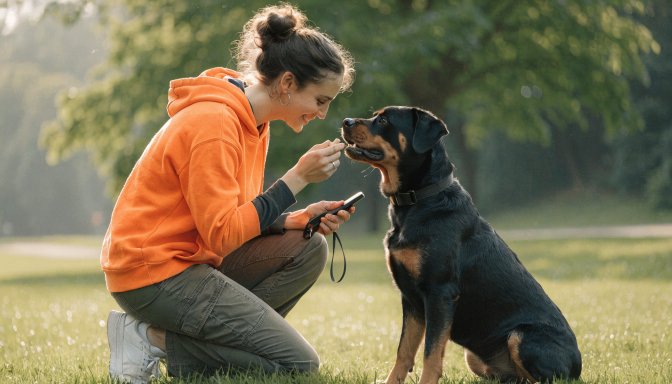
Rottweilers aren’t naturally aggressive—they’re misunderstood. Positive reinforcement works because it rewards desired behaviors with treats, praise, or play, strengthening good actions instead of creating fear. This approach channels their intelligence and protective instincts constructively. During their critical first 16 weeks, socialization rewires their brains through positive experiences. Clear boundaries combined with rewards yield exceptional results, building genuine trust. You’ll transform training into lifestyle through consistent commands, immediate reinforcement, and engaging activities—discovering why this partnership becomes unbreakable.
- Key Takeaways
- The Rottweiler Problem: Why Positive Reinforcement Works
- What Positive Reinforcement Actually Is (and Isn’t)
- Why Treats Work for Rottweilers (Even as Working Dogs)
- Start Early: Socialization + Rewards Build a Stable Foundation
- The First Commands: Sit, Stay, and Come With Treats
- Stop Leash Pulling Without Chokers or Force
- Fix Problem Behaviors the Way Your Rottweiler Actually Learns
- When to Use Treats vs. Praise vs. Play
- Add Boundaries to Build Real-World Obedience
- Managing Aggression and Reactivity (Before It Escalates)
- Why Positive Reinforcement Alone Isn’t Enough
- Balanced Training: Rewards + Accountability
- Make Training Stick When You’re Not Training
- The 5 Mistakes That Derail Positive Reinforcement
- Your First 30 Days: What to Expect and How to Stay Consistent
- Build a Partnership That Lasts
- Frequently Asked Questions
- Conclusion
Key Takeaways
- Positive reinforcement rewards desired behaviors with treats, praise, or play, strengthening good actions while redirecting undesirable behavior effectively.
- Early socialization within the first 16 weeks rewires the brain through positive experiences, preventing future aggression and fearfulness.
- Reward relaxation during leash training by using treats when the leash is slack, reinforcing calm behavior consistently.
- Structured routines reduce anxiety-driven reactivity and help Rottweilers understand clear expectations, promoting stability and confidence.
- Immediate reinforcement with consistent timing strengthens dog-owner communication and prevents mixed signals that undermine training efforts.
The Rottweiler Problem: Why Positive Reinforcement Works
Rottweilers aren’t naturally aggressive dogs—they’re misunderstood.
Why Traditional Methods Fail
You’ve probably heard horror stories about Rottweilers. But here’s what actually happens: harsh corrections create fear and anxiety—not obedience.
Your dog shuts down instead of learning.
The Science Behind Success
Rottweilers possess incredible intelligence and protective instincts. These traits need direction, not punishment.
Rottweilers’ intelligence and protective instincts thrive with direction, not punishment.
Positive reinforcement training channels their natural abilities into constructive behaviors. When you reward calm obedience with treats, praise, or play, you’re speaking their language.
Real Results
Dogs trained with positive reinforcement demonstrate:
- Higher motivation and confidence
- Long-term behavior change
- Stronger trust with you
Your Rottweiler doesn’t want conflict—they want to please a confident leader.
Positive reinforcement provides exactly that: clear expectations without confusion or fear.
What Positive Reinforcement Actually Is (and Isn’t)
Positive reinforcement means rewarding desired behaviors with treats, praise, or play. You’re strengthening good actions—not ignoring bad ones. This positive training approach makes learning enjoyable and inherently rewarding for your dog.
What It Isn’t
Here’s the important distinction: positive reinforcement doesn’t mean overlooking undesirable behavior. Instead, you’re redirecting and minimizing negative actions by rewarding alternative positive ones.
Think of it as strategically shifting focus toward what you *want* rather than punishing what you don’t.
The Power Combination
Pairing positive reinforcement with clear boundaries creates exceptional results. Strong-willed breeds like Rottweilers thrive when they understand expectations alongside consistent rewards.
Structured positive training strengthens both obedience and your bond.
Why Treats Work for Rottweilers (Even as Working Dogs)
Even though Rottweilers were bred as livestock herders and protection dogs—jobs requiring serious focus and drive—they’re surprisingly treat-motivated learners. You might think these working dogs need only commands and duty. Wrong.
Treats activate their reward centers, triggering dopamine release in their brains. This chemical response makes them *want* to repeat behaviors you’ve reinforced. That’s positive reinforcement at work.
Here’s why it matters for your Rottweiler:
Treats channel intelligence. Your dog’s sharp mind craves mental stimulation and purpose. Treats during training sessions satisfy both simultaneously.
Motivation skyrockets. Even working-line Rottweilers connect treats with success, building confidence and obedience simultaneously.
Bonds strengthen. You’re not just rewarding behavior—you’re building trust between handler and dog.
Flexible rewards work best. Some Rottweilers prefer play or toys over treats.
Watch your dog’s preferences carefully.
Start Early: Socialization + Rewards Build a Stable Foundation
When your puppy’s still learning the world—roughly in those first 16 weeks—you’ve got a narrow window to shape who they’ll become. This critical period is when positive reinforcement truly shines.
Why This Matters
During socialization, your Rottweiler’s brain absorbs everything: new people, animals, environments. Each positive experience rewires their confidence circuits.
During socialization, your Rottweiler’s developing brain absorbs everything—rewiring confidence circuits through positive experiences with people, animals, and environments.
You’re fundamentally teaching them what’s normal versus threatening.
Your Action Plan
- Introduce diverse situations consistently
- Reward calm, curious behavior with treats and praise
- Build trust through affection and encouragement
- Establish obedience basics: sit, stay, come
This structured, rewarding approach prevents future aggression and fearfulness.
Your puppy learns to differentiate between ordinary encounters and genuine threats—developing the stable temperament that makes adult Rottweilers reliable, well-adjusted companions.
The First Commands: Sit, Stay, and Come With Treats
Now that you’ve built that foundation of trust and curiosity, it’s time to teach your Rottweiler actual commands—the ones that’ll keep them safe and give you real control.
Sit: Your Foundation Command
Guide their nose upward with a treat, moving it back over their head. Their rear naturally lowers. Reward immediately—this positive reinforcement works because dogs repeat behaviors that earn rewards.
Stay: Building Duration and Distance
Start with “sit,” then hold a treat while stepping back slightly. Reward for staying in place. Gradually increase distance and duration across sessions.
Come: The Safety Essential
Use a long leash, call cheerfully while showing a treat. Reward generously upon arrival.
The Consistency Factor
Short, frequent training sessions keep your Rottweiler engaged.
This obedience foundation builds trust and encourages effective learning through rewards and praise.
Stop Leash Pulling Without Chokers or Force
You’re ready to ditch the choke chain and build real leash manners—here’s how.
By redirecting your Rottweiler’s focus with treats and toys, rewarding loose leash walking, and stopping progress when pulling happens, you’ll create a foundation where your dog wants to stay by your side.
Let’s explore reward-based solutions that actually work with your dog’s natural instincts, not against them.
Redirecting Focus With Distractions
- Use favorite toys to interrupt lunging impulses
- Practice engaging commands (“Watch me!”) consistently
- Reward calm attention with immediate praise
Building Loose Leash Foundation
Before your Rottweiler can master loose leash walking, they’ll need to understand one simple rule: pulling doesn’t work.
Your Foundation Strategy
Here’s how effective training methods reshape leash pulling behavior:
- Stop and wait when tension appears—your dog learns pulling halts progress
- Reward relaxation immediately with treats or praise when they return beside you
- Practice consistently during daily walks to cement loose leash habits
Why This Works
Rottweilers are intelligent, food-motivated dogs who respond brilliantly to positive reinforcement. When you stop moving during leash pulling, you’re removing the reward—forward momentum.
Your dog’s brain connects the dots: slack leash equals walking continues.
Start short. Build duration gradually. Stay engaged throughout. This approach eliminates harsh corrections while creating genuine loose leash walking skills your powerful companion actually wants to maintain.
Reward-Based Pulling Solutions
Three powerful techniques can transform your Rottweiler’s leash behavior without painful equipment or force-based methods.
The Stop-and-Go Strategy
You’ll stop walking immediately when pulling occurs. Resume only when the leash relaxes. This method—rooted in operant conditioning—teaches your dog that calm behavior equals forward progress. Consistency matters tremendously here.
Rewarding Good Behavior
Treat calm walking with immediate praise, treats, or toy play. Your Rottweiler’s brain releases dopamine during rewards, strengthening neural pathways for desired actions. Vary rewards to maintain engagement.
Consistent Training Commands
Use “heel” or “wait” repeatedly during walks. Consistent training establishes structure and redirects focus toward you, not distractions. Your dog learns predictable expectations.
Progressive Difficulty
Gradually increase distance and environmental distractions—parks, busy streets, other dogs. This reinforcement builds reliable leash manners everywhere, proving positive methods work.
Fix Problem Behaviors the Way Your Rottweiler Actually Learns
When your Rottweiler pulls on the leash or jumps on guests, you’re seeing a dog who hasn’t learned better—not a dog who’s being defiant.
Understanding Your Rottweiler’s Brain
Your dog’s strong-willed nature means punishment backfires—it damages trust. Instead, you’ll reshape problem behaviors by redirecting them toward positive alternatives.
Here’s how:
- Redirect undesirable actions into calm, rewarded behaviors immediately
- Reward consistency prevents confusion and solidifies good habits
- Praise + manageable corrections foster clear communication and respect
When your Rottweiler jumps, redirect toward sitting. When he pulls, reward loose-leash walking. This approach taps into positive reinforcement—rewarding good choices builds trust faster than any harsh reprimand ever could.
Your Rottweiler’s reward-driven biology means he’ll enthusiastically repeat behaviors that earn praise, treats, or play.
That’s not manipulation—that’s effective training aligned with how his brain actually works.
When to Use Treats vs. Praise vs. Play
Your Rottweiler’s brain lights up differently depending on what you’re rewarding him with—and that’s your secret to releasing unstoppable motivation.
Treats for New Learning
Use treats when teaching novel commands. They create direct neurological associations—your dog’s brain links the action to immediate reward. This accelerates learning dramatically.
Praise for Reinforcement
Deploy praise to solidify behaviors your Rottweiler already knows. Verbal feedback builds trust and doesn’t create treat dependency. It’s your non-food powerhouse.
Play as Energy Management
Activate play rewards during high-energy sessions. Interactive play sustains engagement without overfeeding treats—critical for maintaining your dog’s weight and enthusiasm.
The Winning Strategy
Rotate all three. This prevents reward fatigue, keeps your Rottweiler guessing, and strengthens motivation across different training scenarios. Your dog stays hungry for learning—literally and figuratively.
Add Boundaries to Build Real-World Obedience
Most Rottweilers naturally respect structure—it’s hardwired into their DNA from centuries of guarding livestock and property.
You’ll strengthen your dog training by establishing clear boundaries that teach limits and prevent misbehavior. Boundaries work alongside positive reinforcement—not against it. Here’s why they matter:
- Physical spaces: Keep your Rottweiler out of certain rooms, creating a controlled environment.
- Behavioral rules: Prevent jumping on guests and other unwanted actions through consistent enforcement.
- Respect building: Clear boundaries foster the leader-follower dynamic your protective Rottweiler needs.
Implement NILIF (Nothing in Life is Free) training, rewarding desired behaviors only after rules are followed. This promotes accountability while reinforcing boundaries.
Combine this approach with praise and play, and you’ll develop reliable obedience that extends beyond training sessions into real-world situations where your Rottweiler truly matters.
Managing Aggression and Reactivity (Before It Escalates)
You’ve laid the foundation with boundaries—now you’re ready to spot the subtle signals before your Rottweiler’s protective instincts spiral into aggression.
When you recognize early warning signs like stiff posture or intense staring, you’ll intervene with confidence-building structure and calm redirection rather than punishment.
This proactive approach—catching the spark before the fire—transforms your dog’s reactivity into manageable, controlled responses.
Recognizing Early Warning Signs
Before aggression escalates into a serious incident, Rottweilers send clear signals—you’ve just got to know what to look for.
Your aggressive dog won’t suddenly snap without warning. These powerful dogs display unmistakable body language cues beforehand. Watch for:
- Stiffening muscles and a rigid stance indicating tension
- Growling or whale eye (showing whites around pupils)
- Avoiding eye contact or intense staring—both signal stress
Understanding these warnings lets you intervene early.
You’ll redirect unwanted behaviors using positive reinforcement techniques before situations escalate dangerously.
Rottweilers descended from Roman mastiffs bred for livestock protection. Today’s breed retains those protective instincts.
Recognizing discomfort signals—stiffness, avoidance, vocalizations—helps you implement commands like “leave it” or “come.”
Early intervention through consistent training builds confidence in your dog.
You’re preventing aggression, not punishing it. That’s the power of positive reinforcement combined with awareness.
Building Confidence Through Structure
Spotting those warning signs is just the beginning—now comes the real game-changer. You’re building your Rottweiler’s confidence through structured routines and clear boundaries. Structure isn’t restrictive—it’s liberating.
Your dog needs predictability. When you establish consistent rules, your Rottweiler understands expectations. This foundation reduces anxiety-driven reactivity. Combine this with positive reinforcement: reward calm behavior instantly with treats or praise.
Structured Activities Channel Natural Instincts
| Activity | Benefit | Frequency |
|---|---|---|
| Obedience training | Builds self-control | 3-4x weekly |
| Playtime sessions | Releases pent-up energy | Daily |
| Relaxation practice | Develops calmness | Before bed |
Confident leadership matters tremendously. Your Rottweiler mirrors your energy. Stay calm during reactive moments. Practice relaxation techniques together—deep breathing works for both of you.
These structured approaches work because they tap into your dog’s natural desire for order and belonging.
Redirecting Reactive Behavior Safely
When your Rottweiler’s protective instincts kick into high gear, you’ve got a narrow window to intervene—and that’s where redirection shines.
Recognizing Trigger Moments
You’ll spot early warning signs: stiffening posture, focused staring, raised hackles. Door knocking? Unfamiliar visitors? These predictable triggers let you act fast.
Training using positive reinforcement means rewarding calm responses instead of punishing reactive ones.
Your Redirection Toolkit
- Distract with purpose: Engage toys or commands during potential trigger moments to redirect focus
- Reward calm behavior: Treats and praise build positive associations with stress-inducing stimuli
- Establish boundaries: Consistent routines foster trust and manage protective instincts effectively
Why This Works
Your Rottweiler’s brain chemistry responds to rewards. Consistency builds neural pathways favoring desired responses over aggression.
You’re fundamentally rewiring their stress response—safely, humanely, and successfully.
Why Positive Reinforcement Alone Isn’t Enough
You’ve probably noticed that treats work wonders—your Rottweiler sits, you reward, they’re thrilled. But here’s the catch: positive reinforcement alone creates treat-dependent dogs, not reliably obedient companions.
The Missing Piece: Corrective Feedback
Strong-willed breeds need boundaries. Without corrective feedback—fair consequences for unwanted behavior—your Rottweiler won’t understand what earns rewards versus what doesn’t.
They’ll struggle with impulse control in real-world situations.
Why Balance Matters
Think of it this way: rewards show what’s right, but corrections teach what’s wrong. When rewards disappear, treat-dependent dogs lose motivation.
A balanced approach combining positive reinforcement with clear, fair corrections creates lasting obedience.
Your Rottweiler’s instincts run deep. They need structured guidance channeling those instincts safely—not just snacks and praise.
Balanced Training: Rewards + Accountability
Your Rottweiler’s strong will demands confident leadership. Mix treats, praise, and play with consistent boundaries. This dual approach prevents confusion while maintaining accountability.
Why Your Dog Thrives on Balance:
- Treats motivate participation; fair corrections teach limits.
- Structured routines (like NILIF) reinforce active learning.
- Clear expectations build long-term behavioral reliability.
When you combine rewards with accountability, your Rottweiler learns that good choices lead to good outcomes. They’re not confused about where they stand.
Confident, calm leadership—backed by both motivation and consequences—unlocks the reliable behavior your breed needs to succeed.
Make Training Stick When You’re Not Training
The real magic happens between training sessions—not during them. You’re reinforcing lessons constantly when you ask for a sit before meals or doorway exits. This everyday positive reinforcement transforms commands from classroom tricks into lifestyle habits.
The real magic happens between training sessions—transforming commands from classroom tricks into everyday lifestyle habits through consistent reinforcement.
Extend Learning Beyond Sessions
Incorporate structured games—fetch, hide-and-seek—requiring commands during playtime. Your Rottweiler’s brain stays engaged, reinforcing neural pathways (the brain’s learning highways).
Puppy socialization classes plus real-world practice help your dog generalize skills across environments.
The “Nothing in Life is Free” Strategy
Every reward—treats, praise, attention—becomes earned through good behavior. Your dog learns: actions create outcomes. Consistently applying this principle cements training into daily routines.
Real retention happens here: during car rides, at parks, around distractions. You’re not “training” anymore. You’re living the training. That’s when it truly sticks.
The 5 Mistakes That Derail Positive Reinforcement
You’re rewarding your Rottweiler’s sit command today—but not tomorrow—and you’ve just created confusion in their brilliant brain.
When you occasionally slip into punishment (scolding or corrections) instead of staying purely positive, you’re sending mixed signals that contradict everything you’ve taught.
Here’s the tough truth: inconsistent reward timing and mixing punishment into your approach will sabotage your entire positive reinforcement strategy faster than your dog can shake off.
Inconsistent Reward Timing
Imagine learning a new skill—say, playing guitar—but only getting feedback about what you’re doing right half the time, randomly, with no pattern.
That’s what inconsistent reward timing does to your Rottweiler’s brain. When you reward positive actions unpredictably, your dog can’t connect the dots between behavior and consequence. Confusion sets in. Frustration follows.
Why Timing Matters
Your Rottweiler’s neural pathways strengthen through immediate reinforcement. Treats or praise delivered within seconds create powerful associations.
Delayed rewards? They backfire spectacularly.
The Real Consequences
- Behavioral regression happens when expectations blur
- Your dog acts out from lack of clarity
- Training progress stalls unnecessarily
Establish predictable reward patterns instead. Your Rottweiler’ll develop confidence, understand cues better, and stay engaged.
Consistency isn’t boring—it’s the foundation of trust and effective learning.
Punishing Unwanted Behaviors
Now here’s where many well-intentioned owners accidentally sabotage their progress. When you resort to punishing unwanted behaviors, you’re actually working against positive reinforcement—not with it.
Your Rottweiler’s brain registers punishment as threat, triggering fear or defensive aggression instead of understanding. Here’s the problem: harsh corrections damage trust and confuse your dog about what you actually want.
The Better Path
Instead of punishing unwanted behaviors, redirect them. Ignore the jumping. Redirect the nipping. Reward the calm sitting. This approach builds confidence while strengthening your bond.
Your dog learns faster through encouragement than through fear. By replacing corrections with positive reinforcement, you’re creating a focused, enthusiastic learner—not an anxious one.
Clear, kind boundaries matter infinitely more than punishment ever will.
Your First 30 Days: What to Expect and How to Stay Consistent
When your Rottweiler first arrives home, you’re launching the most critical training window of their life.
Building Your Foundation
These initial 30 days determine everything. Your consistency matters most—use identical commands, cues, and routines daily. Rottweilers, descended from Roman mastiffs bred for livestock protection, possess strong problem-solving abilities and respond powerfully to predictable patterns.
Consistency in these first 30 days shapes everything. Rottweilers respond powerfully to predictable patterns and identical commands daily.
What You’ll Experience:
- Daily training sessions paired with immediate rewards (treats, praise, play)
- Clear behavioral expectations preventing confusion and anxiety
- Socialization with varied people and environments boosting confidence
Staying the Course
Keep sessions short and engaging. Mix training with fun activities—they’re not separate!
Your Rottweiler’s brain develops rapidly now. Consistency isn’t boring repetition; it’s the language they’re learning to speak with you. When you vary commands or reward timing inconsistently, you’re fundamentally teaching them confusion instead of obedience.
Stay steady, stay committed, stay connected.
Build a Partnership That Lasts
You’ve made it through your first month—now it’s time to build something that actually lasts. The secret? Combining trust through consistent rewards with leadership balanced with kindness, creating a partnership where your Rottweiler sees you as both a fair guide and their trusted friend.
When you reward good behavior reliably and lead with confidence rather than harshness, you’re tapping into how their pack-oriented brains actually work—and that’s when real loyalty clicks into place.
Trust Through Consistent Rewards
Building trust with your Rottweiler hinges on one powerful principle: consistent rewards create predictability—and predictability builds security.
Your dog’s brain releases dopamine when rewarded, strengthening neural pathways that connect good behavior to positive outcomes. This biological mechanism means consistent rewards aren’t just nice—they’re essential for learning.
Here’s what makes this work:
- Immediate rewards (treats, praise, or playtime) happen right after desired behavior, so your Rottweiler links action to consequence.
- Routine reinforcement establishes emotional safety, showing your dog you value their efforts and understand their needs.
- Varied incentives (toys, affection, food) maintain enthusiasm while deepening your partnership through multiple connection points.
When you reward consistently, you’re not just training commands. You’re proving reliable—day after day. Your Rottweiler learns: This person keeps their word. That’s when real trust takes root.
Leadership Balanced With Kindness
The most effective Rottweiler owners recognize an essential truth: leadership isn’t about dominance—it’s about direction. You’re building a partnership—not ruling through fear.
Balanced training combines structure with compassion. Your Rottweiler’s ancestor, the Roman Mastiff, worked alongside humans through trust, not intimidation. Today’s balanced approach mirrors this: you establish clear expectations while using positive reinforcement to encourage willing cooperation.
| Leadership Element | Your Role |
|---|---|
| Set boundaries | Define house rules clearly |
| Reward compliance | Use treats and praise |
| Remain consistent | Follow through daily |
| Show respect | Acknowledge their effort |
Firm yet gentle creates security. Your dog learns you’re reliable—predictable—safe. Kind corrections paired with positive reinforcement build confidence. They’ll respect your direction because you’ve earned their trust through kindness, not fear. This partnership lasts.
Frequently Asked Questions
What Is the 7 7 7 Rule for Dogs?
You’ll find that the 7-7-7 Rule divides your dog’s development into three critical phases: the first 7 weeks for socialization, the next 7 weeks for basic obedience training, and the final 7 months for reinforcing learned behaviors.
How to Mentally Stimulate a Rottweiler?
You’re building a mental fortress for your Rottweiler. Introduce puzzle toys, teach new commands, engage scent work, play interactive games like fetch, and use praise consistently. You’ll unleash their problem-solving brilliance.
How to Bond With Your Rottweiler?
You’ll bond with your Rottweiler through consistent training, engaging playtime, structured activities, and socialization. Use treats and praise, implement the NILIF approach, and establish a partnership built on trust and respect.
What Is the 10 10 10 Rule for Puppies?
You’ll give your puppy 10 minutes of exercise, 10 minutes of training, and 10 minutes of playtime at a time. This balanced approach manages energy levels, prevents overstimulation, and establishes consistent daily routines essential for healthy development.
Conclusion
You’ve learned that punishment creates fear—while rewards build trust. Your Rottweiler isn’t stubborn; they’re simply responding to how you communicate. Those 30 days you invested? They’re reshaping your dog’s brain chemistry, literally strengthening neural pathways toward obedience. You’re not just training a dog. You’re creating a partner who chooses to follow you—not because they must, but because they want to.