Some of the links in this post are affiliate links. This means we may earn a small commission if you make a purchase through these links—at no extra cost to you. We only recommend products and tools that we genuinely believe will help you with your Rottweiler.
Rottweilers shed moderately year-round with heavier peaks during spring and fall when they blow their undercoat. You’ll notice consistent short hair loss across their coat as normal, but sudden patches, visible skin, or intense itching signal a problem requiring veterinary attention. Weekly brushing maintains your dog’s coat during quiet months, while daily brushing with an undercoat rake during peak seasons captures loose hair before it spreads indoors. Bathing every 6–8 weeks with deshedding shampoo, combined with omega-3 supplements, can reduce shedding by 30–50%. Understanding these patterns and tools helps you distinguish routine maintenance from warning signs that demand professional care.
- Key Takeaways
- Do Rottweilers Shed? Understanding Your Breed’s Coat
- When Rottweiler Shedding Peaks: Spring, Fall, and Year-Round Loss
- Is It Normal? Recognizing Excessive Shedding in Rottweilers
- Red Flags: When Your Rottie Needs a Vet Visit
- Brush Weekly Year-Round-Daily During Peak Seasons: Tools and Technique
- Bathe Less to Control Shedding: The 6–8 Week Sweet Spot
- Reduce Shedding 30–50%: How Diet and Supplements Work
- Professional Grooming vs. DIY: Cost, Results, and When Each Wins
- Contain Rottweiler Shedding Indoors: Home Hacks for Dark, Short Hair
- Frequently Asked Questions
- Conclusion
Key Takeaways
- Rottweilers shed moderately year-round with heavier shedding during spring and fall coat blows.
- Normal shedding shows even hair loss without skin irritation; excessive shedding with bald patches requires veterinary evaluation.
- Daily brushing during peak seasons using undercoat rakes and slicker brushes effectively manages loose hair.
- Bathe every 6–8 weeks with deshedding shampoo followed by blow-outs to accelerate undercoat removal.
- Omega-3 supplements and high-quality diet can reduce shedding 30–50% by improving skin and coat health.
Do Rottweilers Shed? Understanding Your Breed’s Coat
Yes, Rottweilers shed consistently year-round, and you’ll want to understand what that means for your home and your dog’s care routine.
Rottweilers shed due to their short, smooth coat with a limited thick double coat on the neck and thighs, earning them a moderate shedders rating of about 3 out of 5 from the AKC.
You’ll notice heavier shedding during spring and fall—called shedding seasons—when your Rottweiler “blows” the undercoat to adjust for temperature changes.
However, their shorter hairs are less conspicuous than those from full double-coated breeds like huskies, making overall fur management easier.
Individual factors including genetics, age, health, and diet influence how much your dog sheds, so consistency in grooming and nutrition supports healthier coat maintenance.
When Rottweiler Shedding Peaks: Spring, Fall, and Year-Round Loss
You’ll notice your Rottweiler sheds year-round at a moderate level, but the real hair loss happens during spring and fall when they “blow” their undercoat to prepare for seasonal temperature changes.
In spring, your dog loosens winter hair to adapt to warmer weather, while fall shedding replaces that lighter coat with thicker fur for colder months, and during these peaks you may see clumps of loose hair and increased tufting on bedding and furniture.
Indoor heating, outdoor activity, and local climate shifts can amplify this seasonal shedding, so you’ll want to anticipate heavier hair loss around major temperature changes and adjust your brushing routine to daily or every other day during these periods.
Spring and Fall Shedding
While Rottweilers shed year-round, their shedding intensifies dramatically during spring and fall when they “blow their coat” to adjust to seasonal temperature changes, and understanding this pattern helps you manage loose hair more effectively.
During these peak periods, you’re considered moderate shedders compared to full double-coated breeds, yet the undercoat loss becomes quite noticeable around your home. The spring blowout prepares them for warmer months, while fall shedding provides insulation for colder weather.
To handle this seasonal surge, increase brushing to daily or several times weekly, using a de-shedding tool or undercoat rake to remove loosened hair before it disperses throughout your space. Bathing with deshedding shampoo followed by vigorous brushing or high-velocity drying accelerates the process, minimizing the hair you’ll find on furniture and floors.
Year-Round Hair Loss
Rottweilers shed consistently throughout the year, with a steady baseline of loose hair that becomes noticeably heavier during spring and fall when seasonal coat changes occur.
You’ll notice year-round hair loss because their limited double coat sheds continuously, even when seasonal shifts aren’t happening.
Understanding this pattern helps you establish an effective grooming routine:
- Spring shedding occurs as winter undercoat releases to help your dog cool down
- Fall shedding intensifies when the coat thickens for colder months ahead
- Year-round maintenance requires regular brushing to catch loose hair before it settles on furniture and clothing
During peak Rottweiler shedding season, use de‑shedding tools or professional grooming to remove undercoat efficiently.
This reinforces coat health and reduces hair accumulation in your home, maintaining consistency in your grooming structure throughout all seasons.
Temperature-Driven Coat Changes
Beyond the baseline shedding that happens year-round, temperature shifts trigger more dramatic coat changes that concentrate hair loss into specific seasons, making spring and fall the peak periods when you’ll notice noticeably heavier accumulation around your home.
During spring shedding, your Rottweiler sheds the thicker winter undercoat to prepare for warmer weather, while fall shedding clears summer hair as a denser coat grows for cold months ahead.
Rapid temperature swings and outdoor activity intensify this seasonal shedding, so expect more loose hair after warm sunny periods followed by cooler days.
Increase your brushing frequency to daily sessions during these changeover months, and consider deshedding tools or professional blow-outs to remove undercoat before it spreads throughout your house.
Is It Normal? Recognizing Excessive Shedding in Rottweilers
You’ll want to distinguish between your Rottweiler’s normal year-round shedding and excessive hair loss, which shows up as sudden bald patches, visible skin, or a dramatic increase in loose hair beyond the heavy spring and fall periods.
Normal shedding leaves your dog’s coat intact with no underlying skin issues, whereas abnormal shedding often brings redness, itching, sores, or changes in your dog’s energy and appetite—signs that point to problems like poor nutrition, parasites, allergies, or skin infections.
If you notice these warning signs, contact your veterinarian promptly so they can identify the cause and recommend treatment, whether that’s dietary adjustments, parasite prevention, or other medical care.
Normal Shedding Patterns
When your Rottweiler leaves loose hair on your furniture and clothes year-round, that’s a normal part of owning the breed, since they’re moderate shedders ranked at 3 out of 5 on the AKC scale.
Their Rottweiler’s coat features a short outer layer with a concentrated double coat at the neck and thighs, which means shedding remains manageable compared to fully double-coated breeds.
You’ll notice consistent patterns throughout the year:
- Year-round gradual shedding that’s steady and predictable
- Heavier “blowing” of their undercoat during spring and fall
- Increased loose hair during seasonal shifts
To manage normal shedding effectively, brush weekly during regular periods and increase frequency during heavy seasons.
This routine maintains coat consistency and reinforces the structure of healthy fur growth.
Signs of Excessive Loss
While moderate, year-round shedding is completely normal for Rottweilers, there’s a meaningful difference between expected seasonal loss and excessive shedding that signals an underlying problem. You’ll want to distinguish between typical coat renewal and hair loss requiring attention.
| Normal Shedding | Excessive Shedding |
|---|---|
| Even loss across coat | Visible skin or bald patches |
| Seasonal consistency | Rapid, sudden increase |
| No skin irritation | Itching, redness, or scabs |
| Steady clumps | Hair clumping easily throughout |
| No accompanying symptoms | Lethargy or weight loss |
When you notice sudden heavy shedding after diet changes, environmental shifts, or stress, consult your vet. Persistent patches, foul odors, or flaking suggest parasites, infection, or allergies. These clinical signs warrant prompt veterinary assessment to identify nutritional deficiencies, food sensitivities, or stress-related conditions causing excessive hair loss.
When to Seek Help
Because Rottweilers shed year-round with predictable seasonal peaks in spring and fall, distinguishing between normal coat renewal and a sign of trouble requires you to know what typical looks like for your dog.
You’ll need veterinary attention if you notice:
- Sudden or patchy shedding with visible bald spots and skin exposure
- Excessive itching accompanied by redness, scabs, or foul odor
- Persistent heavy shedding independent of seasons, plus weight loss or lethargy
These patterns suggest parasites, allergies, infections, or systemic illness rather than normal seasonal coat blowing.
Gradual shedding across your dog’s body paired with poor coat quality may indicate nutritional deficiencies, so discuss diet adjustments and omega-3 supplementation with your veterinarian.
If shedding coincides with behavioral changes or environmental stress, stress-related factors may be responsible, warranting professional evaluation and calming strategies.
Red Flags: When Your Rottie Needs a Vet Visit
Distinguishing between normal seasonal shedding and a sign of underlying health problems requires you to pay attention to the pattern and appearance of your Rottweiler’s hair loss, since what you’re looking for isn’t just the amount of fur your dog sheds but rather whether that shedding follows the typical even distribution you’d expect during spring and fall shifts.
| Warning Sign | What to Do |
|---|---|
| Rapid or patchy hair loss, visible skin, bald spots | Schedule veterinary exam for parasites, infections, hormonal issues |
| Excessive scratching, red skin, scabs, foul odor | Seek prompt treatment for fleas, mites, allergies, skin infection |
| Sudden widespread shedding with appetite/energy changes | Request bloodwork to check for thyroid or metabolic disorders |
| Greasy, flaky skin despite proper diet | Discuss nutritional deficiencies and omega-3 supplementation |
| Increased shedding after medication, vaccine, or stress | Review with vet to rule out adverse reactions |
Brush Weekly Year-Round-Daily During Peak Seasons: Tools and Technique
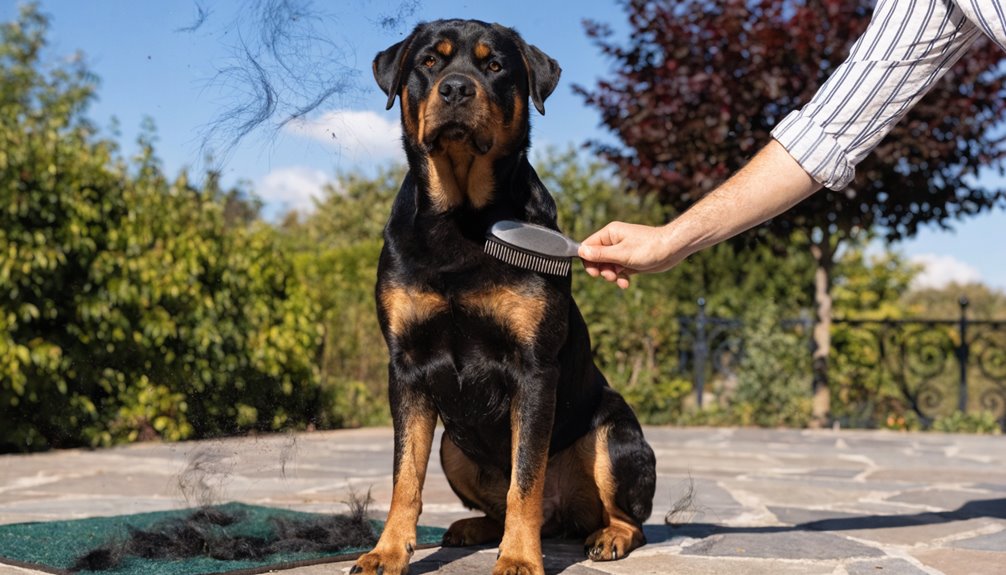
Regular brushing is your most effective tool for managing your Rottweiler’s shedding year-round, and you’ll see the biggest payoff when you commit to a consistent schedule that shifts with the seasons.
During spring and fall, when your Rottie sheds heavily, you’ll want to increase your efforts considerably to prevent loose hair from accumulating throughout your home.
- Use an undercoat rake two to three times weekly during peak shedding to remove dense undercoat tufts that trap loose hair.
- Follow with a slicker brush to smooth the topcoat and capture remaining loose hair effectively.
- Combine brushing with post-bath blow-outs to release loosened hair for maximum deshedding results.
Work outside when possible, brush with light pressure following hair growth direction, and maintain weekly brushing during quieter months to keep shedding manageable year-round.
Bathe Less to Control Shedding: The 6–8 Week Sweet Spot
While consistent brushing tackles loose hair on the surface, your bathing schedule plays an equally important role in controlling shedding from within, since water and shampoo interact directly with your Rottweiler’s skin and coat structure.
Your bathing schedule is equally vital to brushing for controlling shedding, since water and shampoo directly interact with your Rottweiler’s skin and coat.
Bathing every 6–8 weeks strikes the right balance, cleaning and loosening dead hair without stripping away natural oils that protect the coat.
Over-bathing more frequently than every 4–6 weeks actually dries the skin and increases shedding, so resist the urge to bathe too often unless your dog gets visibly dirty or has a skin condition.
During bath time, use a deshedding or moisturizing shampoo to loosen undercoat hair and maintain skin hydration, then brush thoroughly while the coat remains damp with a rubber curry or slicker brush to remove loosened hair and reduce indoor shedding.
Reduce Shedding 30–50%: How Diet and Supplements Work
You can reduce your Rottweiler’s shedding by 30–50% through strategic diet and supplement choices, since what your dog eats directly affects skin hydration, hair strength, and the growth cycle itself.
A strong nutritional foundation prevents the hair loss that comes from deficiency, while targeted supplements reinforce coat quality and normalize seasonal changes.
- Omega-3 fatty acids at veterinary-recommended doses (20–55 mg EPA+DHA per kg daily) improve skin hydration and measurably reduce shedding in diet-responsive cases
- Balanced diet with adequate protein (18–25% of dry matter) supplies amino acids essential for healthy hair growth
- Vitamin E combined with omega-3 and omega-6 supports skin barrier function more effectively than single nutrients
Transition diet changes slowly over 7–10 days to avoid rebound hair loss, and always consult your veterinarian before starting supplements, since underlying parasitic, allergic, or endocrine issues require medical treatment.
Professional Grooming vs. DIY: Cost, Results, and When Each Wins
Beyond nutrition and supplements, how you physically remove loose hair from your Rottweiler’s coat determines how much shedding ends up on your furniture and clothes, making grooming strategy your second major lever for controlling undercoat buildup. Professional groomers use high-velocity dryers and deep undercoat rakes to remove substantially more loose hair than DIY tools during seasonal shed peaks, providing relief for several weeks afterward. DIY grooming with an undercoat rake and slicker brush offers consistent, affordable maintenance when you brush daily during spring and fall, though it requires discipline and proper technique to avoid skin irritation.
| Approach | Cost | Frequency | Best For |
|---|---|---|---|
| Professional | $75–150/session | Every 6–8 weeks | Deep seasonal removal |
| DIY | $150–300 upfront | Daily-weekly | Routine maintenance |
| Hybrid | Combined | Mixed schedule | Maximum shedding control |
Contain Rottweiler Shedding Indoors: Home Hacks for Dark, Short Hair
Rottweilers’ short, dark coat sheds consistently year-round, with dramatic increases during spring and fall blowouts, which means indoor hair accumulation becomes visible quickly on light surfaces and fabrics, requiring a structured containment strategy that starts before fur enters your home.
Rottweilers shed year-round with dramatic spring and fall blowouts, making dark fur visible on light surfaces and requiring proactive containment strategies.
You’ll prevent buildup by implementing these targeted approaches:
- Brush them outdoors weekly with a rubber curry or slicker brush, daily during peak shedding seasons, to capture loose fur before it settles inside.
- Use a micro-filtration robot vacuum on hard floors and pet-rated upright vacuums on carpets to capture dark hair that shows easily on light surfaces.
- Cover beds and furniture with washable slipcovers in dark colors, limiting visible fur and simplifying laundering.
Keep lint rollers and handheld pet hair removers accessible, and maintain your dog’s coat health with weekly brushing, monthly deshedding baths, and omega-3 supplements for consistency.
Frequently Asked Questions
How Do I Make My Rottweiler Stop Shedding?
You can’t completely stop your Rottweiler from shedding, but you’ll markedly reduce it by brushing weekly, bathing every 4–8 weeks, and feeding a balanced diet with omega-3 supplements.
What Is the Best Remedy for Dog Shedding?
Your dog’s coat is like a shedding factory running overtime—you’ll want to add omega-3 supplements daily, brush weekly year-round, and bathe every 4–8 weeks with deshedding shampoo to turn off that production line.
What Months Do Rottweilers Shed the Most?
Your Rottweiler sheds most heavily during March–May in spring and September–November in fall. You’ll need to brush several times weekly or daily during these peak months to manage the loose undercoat effectively.
What Is the Number One Cause of Death in Rottweilers?
Cancer is the leading cause of death in Rottweilers you’ll encounter. You should watch for osteosarcoma and hemangiosarcoma, which commonly affect your breed. Regular vet check-ups help you catch tumors early and explore treatment options.
Conclusion
You’ve now got the tools to manage your Rottweiler’s shedding without drowning in fur. By maintaining consistency with weekly brushing, adjusting bath frequency, and supporting coat health through diet, you’ll reduce shedding by nearly half. Stay alert to excessive loss, which signals underlying issues requiring veterinary attention. With proper structure and reinforcement, you’ll keep your home cleaner and your Rottie’s coat healthier year-round.