Some of the links in this post are affiliate links. This means we may earn a small commission if you make a purchase through these links—at no extra cost to you. We only recommend products and tools that we genuinely believe will help you with your Rottweiler.
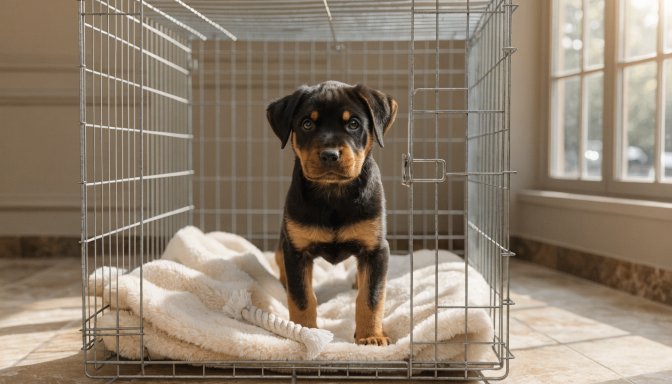
Crate training your Rottweiler taps into their ancestral den-seeking instincts—they naturally crave secure spaces. You’ll build confidence by introducing the crate during calm periods, feeding meals inside, and using premium treats like chicken or cheese. Start with short sessions, keep the door open initially, and stay nearby for reassurance. Position the crate in your family area for social engagement while maintaining temperature control. Recognize stress signals—excessive barking, panting, escape attempts—and adjust your pace accordingly. This foundation transforms crate time from chaos into your dog’s favorite sanctuary, though mastering the specifics requires understanding what separates quick fixes from lasting results.
- Key Takeaways
- Why Rottweilers Need Crate Training
- Choosing the Right Crate Size for Rottweiler Crate Training
- Heavy-Duty Materials That Survive a Rottweiler’s Strength
- Best Placement for Your Rottweiler’s Crate
- Build Positive Associations Through Treats and Play
- Feed All Meals Inside the Crate
- Introduce the Crate When Your Rottweiler Is Calm
- Setting the Stage for Success
- Maintaining the Atmosphere
- Leave the Door Open at First
- Gradually Close the Door for Short Periods
- Crate Duration Limits: How Long Is Safe?
- What to Do When Your Rottweiler Resists the Crate
- Understanding Separation Anxiety and Daytime Fussing
- Keep Your Puppy Engaged With Durable Chew Toys
- Use Background Noise to Reduce Anxiety
- Practice Short Absences to Build Independence
- Stick to the Routine (Consistency Matters Most)
- Never Use the Crate as Punishment
- Common Mistakes That Derail Progress
- The Crate Training Timeline: Week by Week
- Behavioral Milestones: When to Extend Duration
- Recognizing Separation Anxiety: When to Seek Professional Support
- Upgrading Your Puppy’s Crate as She Grows
- Maintaining Crate Training Success Long-Term
- Troubleshooting Setbacks and Regression
- Frequently Asked Questions
- Conclusion
Key Takeaways
- Create positive associations by feeding all meals inside the crate and using premium treats to encourage voluntary entry without pressure.
- Position the crate in a calm family area with consistent daily routines to build predictability, trust, and security for your Rottweiler.
- Start with short sessions and keep the door open initially, gradually closing it briefly to prevent anxiety and overwhelming your puppy.
- Choose a heavy-duty 42-inch metal crate with reinforced hinges and adjustable dividers to ensure comfort, safety, and long-term durability.
- Recognize crate fatigue signs like excessive barking or escape attempts; provide supervised free time indoors and rotate interactive toys to prevent stress.
Why Rottweilers Need Crate Training
When you understand what makes Rottweilers tick, crate training becomes a game-changer. These powerful dogs—originally bred as cattle herders—naturally seek den-like spaces for security. Crate training a puppy establishes this vital refuge early, reducing anxiety and building confidence.
Your Rottweiler’s needs:
- Security: A personal den mimics their ancestral instincts, creating comfort
- House training: Dogs avoid soiling their sleeping area—it’s biological
- Safety: Prevents access to household hazards when unsupervised
Training can help your adult Rottweiler develop impulse control and independence. This separation confidence prevents destructive behaviors born from anxiety.
Think of the crate as their personal fortress—not punishment.
A crate isn’t a punishment tool—it’s your Rottweiler’s personal fortress, a safe haven where they find comfort and security.
When you invest time in proper crate training, you’re investing in a calmer, well-adjusted companion who handles alone-time gracefully.
Choosing the Right Crate Size for Rottweiler Crate Training
You’ll need to measure your Rottweiler carefully—from nose to tail base, then add several inches for comfort.
Selecting heavy-duty metal crates (not flimsy wire ones) prevents breakage when your powerful dog shifts position.
Using adjustable dividers lets you modify the space as your pup grows, keeping them confident and accident-free in properly sized quarters.
Measuring Your Rottweiler’s Space
Because Rottweilers are muscular, powerful dogs—often weighing 80 to 135 pounds—they need a crate that’s actually roomy enough for comfort, not cramped like a shipping box.
Measuring for the Perfect Fit
Your Rottweiler needs a size of at least 42 inches in length for an adult dog.
Here’s how you’ll measure:
- Length: From your dog’s nose to tail’s end while standing
- Height: From floor to top of head when standing upright
- Width: Enough space to turn around completely
For Your Rottweiler Puppy
Start smaller initially.
A Correct Crate prevents nervousness and accidents—puppies instinctively avoid soiling their sleeping space.
Use dividers to expand the space as your pup grows, maintaining that vital snug-but-spacious balance that protects house training progress.
Durability and Material Quality
Your Rottweiler’s strength demands a crate that won’t crack under pressure. These powerful dogs—descended from Roman mastiffs—weigh up to 135 pounds and need heavy-duty protection.
Why Material Matters
Flimsy wire crates simply don’t work. You’ll want quality materials built to last:
- Heavy-gauge steel frames that resist bending and warping from determined paws
- Airline-approved construction ensuring safety during travel and everyday use
- Powder-coated finishes preventing rust while maintaining structural integrity
Durability You Can Trust
Your investment protects both your Rottweiler and your home. Premium crates withstand years of use without deteriorating. They provide peace of mind—knowing your dog stays secure while you’re away.
Look for reinforced hinges, sturdy latches, and tested materials. Quality doesn’t mean expensive; it means reliable. Your Rottweiler deserves a crate that matches their power.
Adjusting for Growth Phases
As Rottweilers rapidly develop from puppies to powerful adults, their crate needs shift dramatically—and getting the sizing wrong can sabotage your training efforts.
Starting Small: The Puppy Phase
Your puppy needs a 30-36 inch crate initially. This snug fit prevents accidents and creates security.
Too large? They’ll potty in one corner, nap elsewhere—defeating training entirely.
The Growth Shift
Around 4-6 months, your Rottweiler outgrows their puppy crate. Adjustable dividers solve this perfectly.
They partition larger spaces, maintaining that cozy den feeling while accommodating developing muscles and bones.
Ongoing Adjustments
Adult Rottweilers require 42+ inch crates. Monitor comfort regularly—your dog’s needs change constantly during growth phases.
When they can’t turn around comfortably, upgrade immediately. Right sizing maintains positive associations and keeps training effective throughout their development.
Heavy-Duty Materials That Survive a Rottweiler’s Strength
When you’re shopping for a crate that’ll actually hold up, you’ve got to think like a Rottweiler—these dogs can exert up to 328 pounds of bite force, so standard pet crates just won’t cut it.
When shopping for a Rottweiler crate, remember these dogs exert 328 pounds of bite force—standard crates simply won’t cut it.
Heavy-duty metal crates are your answer. You need durable materials engineered to withstand intense pressure and prevent escape attempts.
Here’s what matters:
- Thick reinforced steel bars resist bending under force
- Double latching mechanisms eliminate accidental openings
- Solid bases with non-chewable materials deter destructive behavior
Check the weight rating carefully—it should support at least twice your dog’s weight. This guarantees long-term safety and reliability.
Your Rottweiler’s strength demands respect. Investing in quality construction now prevents costly replacements later and keeps your dog secure during crate training.
Best Placement for Your Rottweiler’s Crate
You’ll want to find that sweet spot—a family area where your Rottweiler can see you moving around, yet stays in a quiet zone away from foot traffic and loud appliances.
Temperature control matters tremendously because these powerful dogs can overheat or get uncomfortably cold, so pick an indoor spot with steady climate conditions.
Think of it this way: your pup needs enough action-watching to feel connected, but not so much chaos that crate training becomes stressful.
Family Area Accessibility
Your Rottweiler’s crate placement makes or breaks their training success—and their emotional well-being.
Strategic Family Area Placement
You’ll want to position the crate in your family area—not tucked away in a basement corner. When your Rottweiler gets used to seeing and hearing you nearby, anxiety plummets.
Here’s how to optimize accessibility:
- Position near family spaces where moderate activity happens—kitchens or living rooms work perfectly.
- Use baby gates to expand their accessible zone gradually, building independence safely.
- Maintain quiet corners within that family area for stress reduction during overwhelming moments.
Your pup will associate the crate with belonging, not punishment. They’ll observe family life unfolding while feeling secure inside their den.
Rottweilers are pack animals—biologically wired to stay connected to their humans. This placement satisfies that instinct while supporting crate training success.
Temperature Control Considerations
Strategic Placement Tips:
- Avoid high-traffic zones that fluctuate in temperature.
- Keep the crate away from heating vents and AC units.
- Choose interior rooms over garages or basements.
Inside the crate, add a mat or cover to create a den-like environment. This regulates warmth naturally while reducing anxiety.
Rottweilers, with their dense double coats, overheat easily—so cool placement matters greatly.
Check seasonal changes regularly. Summer requires shadier spots; winter needs warmer areas. Your consistency here builds trust and accelerates successful crate training considerably.
Quiet Space Away From Traffic
The right location can make or break your crate training success. Dog owners often underestimate placement’s power—yet it’s essential. You’ll want your right crate positioned in a calm, controlled environment away from household chaos.
Here’s what works best:
- Choose a family room corner over basements or garages for warmth and connection.
- Use baby gates to create defined quiet zones without isolation.
- Monitor stress levels to verify your dog stays relaxed and content.
A quiet space away from traffic prevents overstimulation. Your Rottweiler’s nervous system—specifically their amygdala (fear center)—processes constant disruptions negatively.
When placed strategically, your dog feels secure yet connected to family life. This balance transforms crate training from stressful to successful.
Build Positive Associations Through Treats and Play
Your Rottweiler’s brain releases dopamine—a “feel-good” chemical—when experiencing rewards. This biological response creates lasting positive memories about the crate itself.
Your Rottweiler’s brain releases dopamine when experiencing rewards, creating lasting positive memories about the crate.
Making It Work:
- Use premium treats like chicken or cheese pieces to lure your pup inside.
- Fill a KONG toy with peanut butter for extended engagement.
- Feed all meals within the crate to reinforce security.
- Play hide-and-seek games with treats inside.
Start with 10-minute sessions and gradually extend duration. Each positive experience strengthens your dog’s association between the crate and safety.
Interactive games transform crate time from confinement into playtime—your Rottweiler won’t want to leave this rewarding space.
Feed All Meals Inside the Crate
You’ll transform your Rottweiler’s crate into a mealtime haven by feeding all meals inside—creating powerful positive associations with the space.
This strategy taps into your dog’s natural den-seeking behavior, making the crate feel like a safe, rewarding zone rather than a punishment.
When you establish this feeding routine consistently, you’re building a predictable rhythm that calms your pup’s nervous system and strengthens their willingness to relax there.
Building Positive Mealtime Associations
Because dogs naturally avoid soiling their sleeping areas, mealtime inside the crate becomes a powerful training tool—not just for feeding, but for house training too. You’re leveraging your Rottweiler’s instincts while building positive mealtime associations.
Creating Rewarding Crate Experiences
Here’s how you’ll transform mealtime into success:
- Gradually introduce your puppy during feeding, ensuring comfort and security.
- Use positive reinforcement—praise and treats—to reduce anxiety and fussy behavior.
- Close the door briefly after meals, extending crate time incrementally.
Making It Engaging
Add interactive toys or puzzle feeders inside. Adult dogs and puppies alike respond to novelty. Your Rottweiler will anticipate crate time enthusiastically.
This consistent approach—feeding all meals inside—signals safety and reward. You’re not forcing confinement; you’re creating desire. That’s the difference between stressed dogs and confident ones.
Establishing Routine Through Feeding
Feeding all meals inside the crate transforms it from a containment tool into a reward center—and that’s where the magic happens.
Why Consistency Matters
You’re fundamentally rewiring your Rottweiler’s brain through repetition. Dogs are creatures of habit; their brains thrive on predictability. When you feed all meals inside the crate consistently, you’re building positive associations that stick.
The Routine Blueprint
- Feed at the same times daily
- Keep meal duration consistent
- Close the door during eating
- Gradually extend crate time post-meal
The Science Behind It
Your pup’s nervous system recognizes the pattern. Repetition triggers dopamine release—that feel-good chemical.
Over weeks, crate training success becomes inevitable because the crate itself becomes synonymous with nourishment and comfort, not confinement.
Introduce the Crate When Your Rottweiler Is Calm
When your Rottweiler’s mind is settled and relaxed, that’s your golden window for crate introduction. You’re leveraging their brain chemistry—calm states reduce cortisol (stress hormone) production, making them receptive to new experiences.
Setting the Stage for Success
- Engage in calm activities first: Gentle play or quiet time prepares your pup mentally before approaching the crate.
- Load it with incentives: Place treats or engaging toys inside, encouraging exploration without pressure—creating positive association naturally.
- Extend duration gradually: Start with short sessions during relaxed moments, then lengthen time as comfort builds.
Maintaining the Atmosphere
Keep your environment quiet and non-disruptive. If anxiety surfaces, your composed demeanor matters—dogs mirror our energy.
Introducing the crate during tranquility isn’t just strategy; it’s neuroscience working in your favor.
Leave the Door Open at First
You’ll want to keep that crate door wide open initially—it’s your secret weapon for building curiosity without triggering fear.
By removing the pressure of confinement, your Rottweiler can explore at their own pace, transforming the crate from a scary cage into an inviting personal den.
This gradual, pressure-free approach lets you observe their comfort level while they naturally develop the confidence they’ll need for closed-door sessions later.
Building Initial Curiosity
The open-door approach is your secret weapon for crate success. When your pup goes to explore naturally, you’re tapping into their innate curiosity—a biological drive that makes learning stick.
Here’s how to build momentum:
- Leave the door completely open so your Rottweiler enters voluntarily, building confidence and eliminating fear.
- Place high-value treats strategically inside to create positive associations with the space.
- Add cozy bedding and toys that make crate time feel inviting, not imprisoning.
Your puppy’s brain releases dopamine—a feel-good chemical—when discovering new environments independently. This creates genuine enthusiasm for crate time.
Watch as your pup goes in and out freely, gradually extending stays without resistance. You’re not forcing confinement; you’re building desire. That’s the difference between stressed puppies and confident ones.
Establishing Safe Exploration
Your Rottweiler’s first encounter with the crate sets everything in motion. Leave that door wide open—no exceptions yet. Your pup needs freedom to investigate at their own pace, without pressure or fear.
Make It Irresistible
Place treats and toys towards the back of the crate. Your dog’s natural curiosity pulls them inside. Let them enter and exit freely whenever they want. This control matters tremendously for building trust.
Watch for Progress
Notice when your Rottweiler stops fussing and relaxes inside. Praise enthusiastically! These moments reinforce comfort and security. Your encouragement strengthens positive associations with the space.
The Timing Factor
Only after your puppy demonstrates genuine relaxation should you consider closing the door—and only briefly at first.
Rushing this step undermines everything you’ve built.
Removing Pressure and Fear
When you leave that crate door wide open, something powerful happens—your Rottweiler stops viewing confinement as a threat.
Why Open Doors Work
Rottweiler owners understand that anxiety levels plummet when puppies control their own movement. Your pup explores freely, building confidence gradually. This approach taps into canine psychology—dogs naturally seek enclosed spaces as dens, but only when they choose entry and exit.
Creating Positive Associations
- Feed meals near or inside the open crate consistently.
- Reward curious exploration with praise and treats immediately.
- Stay nearby during initial investigations to provide reassurance.
The Gradual Shift
Feeding your Rottweiler inside establishes positive associations with the space. It transforms the crate from intimidating prison into inviting haven.
Once comfort solidifies, close the door briefly—just seconds initially—while remaining visible. Your presence matters enormously during this phase, reinforcing safety and trust throughout the process.
Gradually Close the Door for Short Periods
Close the door for just a few seconds while your Rottweiler puppy relaxes inside. You’re trying to sleep soundly, and so is your pup. Gradually extend closure duration as comfort builds. This incremental approach—rooted in behavioral conditioning—rewires their brain’s threat response.
Watch Their Signals
Monitor body language constantly. Relaxed ears? Soft eyes? You’re succeeding. Tense posture or whining? Revert to shorter durations immediately. Puppies communicate through physical cues; listen carefully.
Reinforce Calmly
Reward peaceful behavior during door closure with treats or praise. Your pup learns: *closed door equals good things.*
Soon, they’ll come back to the back of the crate voluntarily, viewing it as their sanctuary rather than a prison. Consistency transforms anxiety into confidence.
Crate Duration Limits: How Long Is Safe?
You’ll want to match crate time to your Rottweiler’s age and bladder capacity—puppies need breaks every 2–3 hours, while adults can handle 4–5 hours max during the day.
How do you spot when your dog’s had enough? Watch for whining, pacing, or accidents—these are telltale signs of crate fatigue, your pup’s way of saying “I’m done!”
Age-Appropriate Time Guidelines
One hour per month of age—that’s your golden rule for Rottweiler puppies. This guideline helps their developing bladders stay comfortable and let you know when they’re ready for longer periods.
Here’s what age-appropriate crating actually looks like:
- Puppies 2–4 months: Cap crate time at 3 hours maximum during daytime hours.
- Dogs 6 months and older: They’ll handle up to 5 hours comfortably as their bladder control strengthens.
- Overnight crating: Expect 6–8 hours since puppies hold bladders longer while sleeping.
Young Rottweilers have limited bladder control—their bodies simply aren’t ready for marathon crate sessions yet.
Respecting these limits reduces separation anxiety and prevents accidents.
Every pup develops differently though. Watch yours closely and adjust accordingly.
Signs Of Crate Fatigue
Because Rottweilers can’t tell you when they’re uncomfortable, you’ve got to watch for physical and behavioral red flags that signal crate fatigue.
Your dog’s stressed signals include:
- Excessive barking or howling – desperate communication attempts
- Destructive behavior – scratching, chewing cage materials
- Escape attempts – climbing, pushing against doors
- Panting and pacing – anxiety indicators showing elevated stress hormones
- Whining – distress vocalizations you shouldn’t ignore
These behaviors don’t mean your Rottweiler’s “being bad.” They’re actually warning signs.
Your 4–5 hour daily limit exists for good reason—beyond it, stress accumulates rapidly.
Puppies under six months? They’ll show fatigue faster due to smaller bladders and developing nervous systems.
Notice panting or restlessness early. Adjust accordingly. You’re preventing serious anxiety issues by staying observant and responsive to your dog’s needs.
Building Gradual Duration Tolerance
Start small—really small. Young puppies need just 10-15 minutes initially. Your dog’s bladder and mind aren’t ready for marathon sessions yet. Here’s your
What to Do When Your Rottweiler Resists the Crate
When your Rottweiler pulls away from the crate or refuses to enter, you’re witnessing a completely normal response—not a sign of failure. Resistance stems from their natural instinct to avoid confined spaces—a survival mechanism thousands of years old.
| Resistance Signal | What It Means | Your Action |
|---|---|---|
| Backing away | Fear or uncertainty | Pause training immediately |
| Whining or barking | Anxiety building | Don’t force entry |
| Refusing treats near door | Deep discomfort | Restart with open door |
Never force your dog inside. This backfires badly, intensifying anxiety and distrust. Instead, slow down considerably. Return to leaving the crate open with treats scattered inside. Let exploration happen naturally—no pressure, no timeline.
Your patience builds their confidence gradually.
Understanding Separation Anxiety and Daytime Fussing
When you leave your Rottweiler in the crate, you might notice fussing, howling, or frantic escape attempts—classic signs of separation anxiety. Your dog’s brain is actually triggering a stress response because they’re pack animals who evolved to stay with their group, not isolated alone.
You’ll need to distinguish between boredom-related whining and genuine anxiety so you can tackle the real problem.
Addressing Daytime Crating Challenges
You’re facing a tough situation: your Rottweiler struggles with being crated during the day, especially when boredom or loneliness kicks in. The good news? You can combat this by strategically placing the crate away from high-traffic zones and offering engaging chew items like bully sticks or KONG toys during crate time.
Gradually building up alone time—while rewarding calm behavior—teaches your dog that solitude isn’t something to fear.
Recognizing Separation Anxiety Signals
Your Rottweiler’s distress when you leave isn’t just fussing—it’s a real stress response. Their nervous system activates the fight-or-flight response, flooding their body with stress hormones.
You’ll notice distinct signals indicating genuine anxiety:
- Excessive vocalization — barking, howling, or whining lasting 30+ minutes shows elevated anxiety levels.
- Destructive behaviors — scratching at crate walls or doors signals panic and desperation to escape.
- Physical signs — panting, drooling, or trembling reveals genuine physiological distress, not mere attention-seeking.
These aren’t behavioral problems—they’re anxiety symptoms. Your pup isn’t being stubborn; their brain’s processing separation as a genuine threat.
Understanding this distinction matters. Rottweilers are pack animals historically bred for companionship, making alone time genuinely difficult. Recognizing these signals helps you respond with appropriate training strategies rather than punishment.
Addressing Daytime Crating Challenges
Most Rottweilers don’t fuss in their crates just to annoy you—they’re genuinely struggling with separation anxiety or boredom. Your pup’s howling or bar-chewing signals real distress, not defiance.
Puppies cry inconsistently: sometimes 30 minutes, sometimes over an hour—showing they need gradual adjustment.
Proven Solutions That Work
Before crating, try these:
- Vigorous play sessions
- Bathroom breaks
- Engaging toys (KONGs filled with treats)
Strategic Crate Placement
Position the crate where your Rottweiler sees you. This visibility reduces loneliness and boosts security greatly. You’re not creating dependency—you’re building confidence.
Building Independence Gradually
Implement supervised free time indoors. Increase alone time slowly. Introduce alternative spaces. These practices combat separation anxiety effectively, transforming your Rottweiler into a calm, confident crate-companion.
Keep Your Puppy Engaged With Durable Chew Toys
As your Rottweiler settles into the crate, boredom becomes your biggest enemy.
Combat Crate Boredom Strategically
You’ll want durable chew toys that withstand powerful jaws. Here’s your game plan:
- Start with bully sticks and KONGs — these classics reduce anxiety during crate time.
- Rotate toys weekly — prevents interest loss and extends calm sessions.
- Use treat-filled interactive toys — creates positive crate associations naturally.
Why This Works
Your puppy’s brain needs stimulation. Varied textures and flavors trigger mental engagement—like how wolves historically investigated new scents.
This sensory variety keeps them occupied longer.
Safety First
Always choose appropriately-sized toys. Rottweilers have incredible bite force (around 328 PSI). Undersized toys risk choking hazards or destructive behavior.
The Result
When you’re away, your Rottweiler stays engaged rather than anxious. They’ll actually look forward to crate time. That’s powerful.
Use Background Noise to Reduce Anxiety
While toys keep your Rottweiler’s mouth busy, their ears still pick up every sound—the mailman, a slamming door, a car alarm.
Why Silence Backfires
Sudden noises startle anxious puppies, triggering stress responses. Your solution? Strategic background audio.
Sound Solutions That Work
Classical music reduces canine anxiety scientifically. Studies confirm it helps dogs feel secure.
White noise machines provide consistent, drowning-out soundscapes—think of them as auditory shields masking distractions.
Getting Volume Right
Here’s the critical part: keep it comfortable. Too loud amplifies anxiety rather than calming it. Aim for soft, steady tones.
Building Positive Associations
Consistent familiar sounds transform crate time into a den-like sanctuary.
Your Rottweiler learns: this space means relaxation. That’s powerful conditioning happening right before your eyes.
Practice Short Absences to Build Independence
Your Rottweiler’s independence doesn’t build overnight—it develops through consistent, bite-sized practice sessions.
You’re fundamentally rewiring your pup’s brain chemistry. When dogs experience manageable separation, their anxiety-regulating neurotransmitters strengthen over time. Start small:
- Step into another room for 2-3 minutes while your Rottweiler stays crated—they’ll learn you always return.
- Reward calm behavior immediately upon your return with treats and praise, reinforcing that quiet time equals positive outcomes.
- Gradually extend absences as confidence builds—moving from minutes to hours at your own pace.
Practice this daily during natural routines. Your puppy won’t panic if they’re accustomed to brief solo moments.
Watch for signs of stress—excessive panting, whining, or pacing—and adjust accordingly.
Think of it like building muscle; small, consistent efforts create lasting strength.
Stick to the Routine (Consistency Matters Most)
Consistency isn’t just helpful—it’s the foundation that makes everything else work. Your Rottweiler’s brain thrives on predictability. When you establish a daily crate schedule, your pup knows exactly what to expect—and that security? It’s transformative for reducing anxiety.
Here’s what consistency delivers:
- Same crating times each day create natural rhythms
- Identical commands signal what’s happening next
- Regular schedules build trust between you and your dog
Incorporate crate time during naps and quiet periods. Use the same cues consistently. Your Rottweiler learns patterns quickly—their ancestors relied on routine for survival.
Reward calm behavior with treats and praise. Gradually extend crate duration as comfort increases.
This predictable approach transforms crate training from stressful to seamless. Your consistency becomes your puppy’s anchor.
Never Use the Crate as Punishment
One critical mistake can derail everything you’ve built—confusing the crate with timeout or consequence. Your Rottweiler’s brain processes associations quickly. When you force them into the crate during anger or frustration, they learn: crate equals bad things happen.
This triggers stress responses in their amygdala (the brain’s alarm center). Anxiety develops fast.
Why This Backfires:
- Fear replaces comfort—your dog dreads entering instead of retreating willingly
- Behavioral problems multiply—destructive habits, aggression, or escape attempts emerge
- Training collapses—positive reinforcement loses effectiveness entirely
Instead, reward calm crate behavior consistently. Treats, praise, and quiet time inside build positive associations. Your Rottweiler transforms the crate into their genuine safe den—not a prison cell. That’s the real power here.
Common Mistakes That Derail Progress
Even the best crate-training plans derail when you make these critical errors.
Confining Too Long
You’re setting your Rottweiler up for failure by crating longer than 4–5 hours daily. Young puppies especially struggle with extended confinement, creating restlessness and frustration that undermines training.
Crating longer than 4–5 hours daily sets puppies up for failure, creating restlessness that undermines your training progress.
Over-Excitement Upon Release
When you burst with enthusiasm opening the crate, your puppy learns chaos follows confinement. This reinforces negative associations instead of calm, rewarding behavior.
Skipping Consistency
You abandon the routine after initial success? That’s a recipe for confusion and anxiety. Your Rottweiler needs predictable patterns to feel secure long-term.
Treating It As Punishment
Forcing your dog inside transforms the den into a prison. Your puppy resists entering, negating the entire purpose of creating that safe sanctuary.
Avoid these pitfalls, and watch your training progress flourish.
The Crate Training Timeline: Week by Week
Now that you’ve dodged those common pitfalls, you’re ready to map out your actual training plan.
Your Rottweiler’s progression matters. Here’s your week-by-week roadmap:
- Week One: Let your pup explore freely. No pressure, no closed doors yet. Just curiosity and comfort-building.
- Weeks Two-Three: Extend alone time gradually. Close the door during calm sessions. Introduce overnight stays to build independence and confidence.
- Week Four+: Establish rock-solid routine. Use treats and praise consistently. Your Rottweiler now views the crate as their safe den.
What’s realistic? Success takes patience—sometimes six months total.
Your dog’s brain needs time to rewire. Expect ups and downs. That’s totally normal.
Stay consistent, stay positive, and you’ll transform your Rottweiler into a crate-loving companion who actually *wants* that cozy space.
Behavioral Milestones: When to Extend Duration
Your Rottweiler’s been crushing those early crate sessions—but how do you know when they’re truly ready for longer stretches?
Reading the Signs of Readiness
Watch for consistent calm behavior lasting 10-15 minutes. Your pup’s relaxed body language—soft eyes, natural breathing, no whining—signals genuine comfort, not just tolerance.
| Milestone | Duration | Behavior Indicator |
|---|---|---|
| Initial comfort | 10-15 min | Quiet, relaxed posture |
| Extended stay | 30 min | No fussing or anxiety |
| Progressive increase | 1 hour | Sustained calmness |
| Mastery | 2+ hours | Voluntary napping |
Making Extensions Stick
Increase duration gradually—jump too fast and you’ll undo progress. During low-traffic times, extend sessions incrementally. If distress appears, revert immediately to shorter durations. Use treats and praise right after quiet periods, reinforcing that calmness equals rewards. Your Rottweiler’s success depends on patience and consistent positive reinforcement.
Recognizing Separation Anxiety: When to Seek Professional Support
Progress in the crate feels solid—but then your Rottweiler’s behavior suddenly shifts.
Signs You Shouldn’t Ignore
You’re noticing excessive barking, howling, and destructive chewing. Your pup attempts escape repeatedly. These red flags signal separation anxiety—a real condition affecting your dog’s nervous system.
When Professional Help Matters
- Distress lasting 30+ minutes: Fussing beyond this threshold means your dog needs expert guidance, not more solo crate time.
- Consistent destructive behavior: Despite positive reinforcement efforts, your Rottweiler continues escaping attempts and property damage.
- Behavioral escalation: Problems worsen despite gradually extending crate duration and maintaining consistency.
Well-adjusted dogs can learn independence. Your Rottweiler isn’t failing—you’re recognizing limits.
Professional trainers understand canine psychology deeply. They’ll create customized solutions addressing your specific situation, transforming anxiety into confidence.
Upgrading Your Puppy’s Crate as She Grows
As your Rottweiler transforms from a compact pup into a powerful adult—sometimes doubling or tripling in size within months—her crate needs’ll evolve too.
Start with Adjustable Dividers
Dividers reduce your crate’s interior space, preventing her from feeling lost. As she grows, you’ll simply remove panels. This strategy keeps her comfortable at every stage without purchasing multiple crates.
Upgrade to Heavy-Duty Metal
Rottweilers develop incredible jaw strength—around 328 pounds of pressure per square inch. Flimsy designs crack easily. Heavy-duty metal crates withstand their natural power as they mature into 80-135-pound adults.
Plan for Travel
Consider upgrading to an airline-approved crate eventually. It provides security during outings while maintaining familiar comfort.
Add cozy bedding reflecting her preferences—this strengthens her sense of belonging throughout her transformation into adulthood.
Maintaining Crate Training Success Long-Term
Once you’ve nailed the basics—finding the right size, using dividers, and upgrading to heavy-duty metal—the real work begins.
Building Lasting Success
Long-term crate training requires consistent effort. You’re not done after the initial phase. Here’s what keeps your Rottweiler thriving:
- Reinforce positive associations daily — treats, toys, and praise whenever she enters voluntarily
- Maintain predictable routines — dogs’ brains crave consistency; irregular schedules trigger anxiety
- Gradually extend duration — build from 30 minutes to several hours, preventing stress
The Ongoing Investment
Your Rottweiler’s crate should evolve. Update bedding seasonally. Rotate toys to maintain interest.
Evaluate comfort regularly.
Think of crate training like brushing teeth—one-time effort doesn’t cut it. Rottweilers, bred as working dogs since medieval times, actually thrive with structure. Their biology responds to predictability.
Stay committed. Your dog’s independence—and your peace of mind—depends on it.
Troubleshooting Setbacks and Regression
Even the best-trained Rottweilers sometimes backslide—and that’s completely normal. Regression happens when your pup exhibits increased fussing or avoidance during crate time, signaling separation anxiety that needs addressing.
Identify the Cause
- Changed crate location triggering stress
- Inconsistent routine disrupting comfort
- Insufficient mental stimulation (boredom)
- Underlying anxiety issues
Your Action Plan
Gradual acclimation works best. Move the crate to a quieter, more interactive space where your Rottweiler feels secure.
Reintroduce short intervals—just five minutes—then extend duration as calmness returns.
Build Success
Stuff KONGs with treats. Celebrate small wins enthusiastically. Fluctuations are normal; patience matters most.
You’re rewiring your dog’s emotional response to confinement through consistency and positive reinforcement—that takes time.
Frequently Asked Questions
What Is the 10 Minute Rule for Crate Training?
Don’t you want your puppy feeling safe in their crate? The 10 Minute Rule means you confine your puppy for short periods, gradually increasing duration while using positive reinforcement and engaging toys to build comfort and reduce anxiety.
What Is the 7 7 7 Rule for Dogs?
You can use the 7-7-7 rule to determine your puppy’s bladder capacity: for every 7 days of age, they’ll hold it roughly 1 hour. So you’ll adjust crate time accordingly as your pup matures.
Is Crate Training Good for Rottweilers?
Yes, crate training’s excellent for your Rottweiler. You’ll provide them a secure den, reduce destructive behaviors, and facilitate house training by leveraging their natural instinct to avoid soiling their sleeping area.
How to Crate Train Without Causing Separation Anxiety?
You’ll hit the ground running by gradually introducing your Rottweiler to the crate, using positive reinforcement like frozen KONGs, practicing short absences, positioning it in family areas, and establishing consistent routines that build security.
Conclusion
You’ve transformed your Rottweiler into a crate-loving champion—seriously, your pup now treats that crate like a five-star hotel! You’ve conquered separation anxiety, dodged behavioral disasters, and built trust that’ll last forever. Your massive, powerful dog now voluntarily enters their den without drama. That’s not just training—that’s pure magic. You’re basically a dog-training superhero now. Celebrate this incredible win!