Some of the links in this post are affiliate links. This means we may earn a small commission if you make a purchase through these links—at no extra cost to you. We only recommend products and tools that we genuinely believe will help you with your Rottweiler.
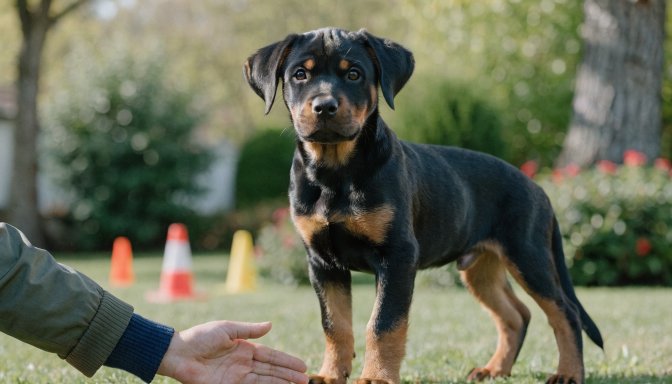
Build your Rottweiler’s confidence during the critical first 16 weeks—your puppy’s brain is remarkably moldable right now. Start with gradual exposure: household sounds week one, neighborhood walks week three, parks week five. Use positive reinforcement immediately when she shows courage; praise releases dopamine, strengthening brave behavior. Establish predictable routines with 1-2 hours daily exercise plus mental games like puzzle toys. Recognize low-confidence signs: tucked tail, pinned ears, freezing. Train basic commands indoors first, then varied environments. Create safe retreats when anxious. Your consistency—not force—transforms fearful puppies into bold adults. The specific techniques that maximize this window await below.
- Key Takeaways
- Why Your Rottweiler Puppy Needs Confidence Now
- The Critical Window: Socialization From Week One
- Understanding Your Rottweiler’s Natural Temperament
- Low Confidence Signs in Rottweiler Puppies
- Establish Daily Routines That Build Trust
- Introduce People: Your First Confidence-Building Strategy
- Positive Encounters With Other Dogs During Puppyhood
- Safe Spaces Build a Confident Puppy
- Desensitize Your Puppy to Common Fear Triggers
- Reward Brave Behavior With Treats and Praise
- Build Confidence Through Basic Command Training
- How Play Strengthens Your Puppy’s Self-Assurance
- Exercise Your Confident Rottweiler Puppy Daily
- Mental Games That Build Competence and Confidence
- The Confidence Balance: When to Challenge, When to Protect
- Avoid Over-Protecting Your Puppy: Let Them Learn
- Consistency Builds Confidence: Here’s Why It Matters
- Step-by-Step Guide to Safe Environmental Exposure
- When Your Puppy Struggles: Managing Setbacks Effectively
- Red Flags: When Professional Training Becomes Necessary?
- How Structured Classes Build Confidence and Skills
- Teach Impulse Control to Boost Self-Regulation
- Track Confidence Milestones: What to Look For
- Common Mistakes That Kill Puppy Confidence
- Choosing Safe Training Tools for Puppies
- Speak Your Puppy’s Language: Consistency Builds Confidence
- Frequently Asked Questions
- Conclusion
Key Takeaways
- Begin early socialization within the first 16 weeks to shape brain development and prevent fear-based behaviors through varied environmental exposure.
- Use positive reinforcement with high-value treats and enthusiastic praise to strengthen connections between brave behavior and positive outcomes.
- Establish consistent daily routines including one to two hours of exercise, regular training, and predictable feeding schedules for security.
- Introduce new stimuli gradually in low-stress environments, progressing from household sounds to busier settings while monitoring body language.
- Provide mental stimulation through puzzle toys, nose work, and interactive games to build problem-solving skills and genuine confidence.
Why Your Rottweiler Puppy Needs Confidence Now
The critical window you’ve got—right now—closes fast. Around 16 weeks, your puppy’s socialization period (the time they’re naturally most receptive to new experiences) practically shuts down. Miss it? You’re playing catch-up for years.
What happens without confidence:
Puppies lacking confidence develop fear-based behaviors. They avoid new situations. They cower. They become unpredictable—sometimes even aggressive out of anxiety, not aggression.
Confident puppies thrive. Lacking confidence, they develop fear-based behaviors, avoid new situations, and risk unpredictable aggression born from anxiety.
Why building confidence matters:
Confident puppies handle life better. They adapt to crowds, loud noises, strangers. Their brains literally develop stronger neural pathways for problem-solving when exposed to diverse, safe environments early.
The payoff? A balanced, well-adjusted adult dog. One that doesn’t spiral into anxiety issues. One that trusts you—and itself.
Your window? It’s narrow. Act now.
The Critical Window: Socialization From Week One
You’ve got a narrow window—just 16 weeks—to build your Rottweiler’s confidence through early exposure to people, animals, and environments.
Starting socialization at one week old creates a rock-solid foundation that shapes their entire temperament and helps them handle life’s curveballs without fear or aggression.
Those positive experiences you provide now? They’re literally rewiring your puppy’s brain to stay calm and confident in whatever situation they’ll face later.
Early Exposure Builds Foundation
Because your Rottweiler puppy’s brain is most receptive during their first 16 weeks of life, starting socialization immediately matters—and we mean *immediately*. Early exposure during this critical window literally shapes neural pathways in their developing brain.
Why Early Exposure Works:
Your puppy’s neurons are forming connections at lightning speed. Each new experience—different sounds, people, textures, environments—creates permanent mental blueprints.
You’re not just introducing your pup to the world; you’re building their confidence architecture.
What to Prioritize:
- Varied environments (parks, streets, stores)
- Different people and ages
- Other vaccinated dogs
- Novel textures and sounds
Without early exposure, your Rottweiler develops fear responses to normal stimuli. They’ll react defensively instead of confidently.
That’s why those first weeks aren’t optional—they’re foundational.
The 16-Week Window Matters
Now here’s where timing becomes everything—and we’re not exaggerating.
Your Rottweiler puppy’s brain is fundamentally a sponge until 16 weeks old. During this critical window, her openness to new experiences peaks dramatically.
You’ve got a biological advantage here—her neural pathways are forming rapidly, absorbing lessons about what’s safe and what’s threatening.
Why This Matters
Missed opportunities during these weeks? They’re tough to recover from later. Puppies exposed to diverse people, sounds, and environments now develop genuine confidence, not just obedience.
Your Action Plan
Enroll her in socialization classes immediately.
These structured settings teach her to differentiate between friendly interactions and actual threats. Reward calm behavior around unfamiliar stimuli consistently.
Early positive experiences literally rewire her developing brain.
You’re preventing future anxiety, fearfulness, and aggression by acting now—not later.
Positive Experiences Shape Behavior
Start building your Rottweiler’s confidence from day one—because her brain is literally rewiring itself right now. During these critical weeks, positive experiences act like neural pathways—they’re the highways your puppy’s mind builds for processing the world safely.
Here’s what those positive experiences accomplish:
- Prevent fear responses by exposing her to varied people, dogs, and environments
- Build adaptive thinking so she learns what’s genuinely threatening versus normal activity
- Establish trust through consistent, rewarding interactions during this sensitive period
When you intentionally create positive experiences, you’re fundamentally programming her nervous system toward confidence rather than defensiveness.
Your puppy’s brain absorbs everything now—the friendly neighbor, the busy street sounds, other dogs playing.
Skip this window, and you’ll likely face protective behaviors later.
Embrace it? You’re raising an assured, well-adjusted companion who handles life’s surprises with calm assurance.
Understanding Your Rottweiler’s Natural Temperament
When you bring home a Rottweiler puppy, you’re getting more than just a cute furball—you’re inheriting thousands of years of working dog genetics. Your Rottweiler’s temperament isn’t random; it’s hardwired from their heritage as herding and cart-pulling dogs.
What This Means for You:
Your puppy naturally possesses:
- Strong protective instincts
- Intelligence and loyalty
- Reserved behavior toward strangers
- Deep family bonds
These traits aren’t flaws—they’re features. Your pup’s cautiousness around unfamiliar people reflects their guardian roots.
Their intelligence means they’ll respond brilliantly to structured training but need consistent direction.
Understanding this foundation helps you work with your Rottweiler’s nature, not against it. When you recognize these innate drives, you’ll build confidence more effectively through purposeful socialization and positive experiences.
Low Confidence Signs in Rottweiler Puppies
Because your Rottweiler’s natural reserve can sometimes tip into genuine anxiety, you’ll want to spot the difference between cautious and truly fearful.
Body Language Red Flags
Low confidence manifests through distinct physical signals. Watch for:
- Tucked tails and pinned-back ears—classic fear indicators showing your puppy feels threatened.
- Cowering, trembling, and excessive rolling over—submissive behaviors revealing deep uncertainty.
- Freezing or overstimulation in busy areas—your pup’s nervous system hitting overload.
Behavioral Warnings
You’ll notice avoidance behaviors too. Your puppy might turn away from new situations or refuse moving forward.
Sudden barking outbursts or lunging at unfamiliar stimuli? That’s uncertainty talking—not aggression.
These signs aren’t permanent personality traits. They’re treatable responses showing your Rottweiler needs confidence-building support.
Recognizing them early matters tremendously for healthy development.
Establish Daily Routines That Build Trust
You’ll discover that your Rottweiler puppy thrives when you establish consistent daily routines—regular feeding times, exercise schedules, and training sessions create predictability that calms their nervous system.
This consistency works because puppies’ brains are wired to feel secure when they know what comes next, reducing anxiety and building trust with you as their reliable leader.
When your pup can anticipate these structured moments, they develop genuine confidence rather than fear-based obedience.
Consistency Reduces Puppy Anxiety
Just like you’d feel anxious in a chaotic environment, your Rottweiler puppy thrives on routine. Consistency—the practice of repeating actions at the same times—helps calm your pup’s nervous system and builds confidence.
When you establish predictable routines, your puppy’s stress hormones decrease markedly. This happens because their brain stops working overtime trying to anticipate what comes next.
Here’s how consistency reduces anxiety:
- Scheduled feeding times regulate digestion and create security anchors throughout your day.
- Routine potty breaks prevent accidents and build bladder control confidence.
- Consistent training cues eliminate confusion, helping your puppy understand expectations clearly.
Your Rottweiler gradually learns the daily rhythm. This predictability transforms nervous energy into focused attention.
A calm puppy learns faster, bonds stronger with you, and develops genuine confidence through knowing exactly what to expect next.
Predictability Fosters Lasting Trust
Your puppy’s anxiety decreases when life becomes predictable, and that calm foundation transforms into something deeper—lasting trust.
Why Predictability Matters
When you establish consistent feeding times, training sessions, and walks, your Rottweiler puppy learns what comes next. This predictability—the ability to anticipate events—activates their parasympathetic nervous system (the calming response). Your puppy’s brain literally relaxes.
Building Trust Through Routine
Scheduled interactions create a framework where your puppy understands boundaries and expectations. They’re not guessing or worried. Instead, they’re confident because you’re reliable. This consistency reinforces that you’re trustworthy.
The Confidence Connection
Puppies exposed gradually to new experiences through structured routines develop stronger confidence. They handle surprises better.
They trust you’ll guide them safely through unfamiliar situations.
Predictability isn’t boring—it’s the bedrock of unwavering trust and genuine confidence.
Introduce People: Your First Confidence-Building Strategy
Because Rottweilers are naturally protective dogs, early people exposure matters—a lot. You’ll want to introduce people during their critical socialization window: up to 16 weeks old. This period shapes their brain development, determining how they’ll react to strangers throughout life.
Here’s your strategy:
- Schedule structured outings where your puppy meets various individuals—different ages, appearances, and voices.
- Reward calm behavior with treats and praise when interactions go well.
- Keep experiences positive and gradual to prevent overwhelming your pup.
Each friendly encounter builds confidence. Your Rottweiler learns to differentiate between friends and potential threats.
You’re fundamentally teaching their brain: “These people are safe.” This foundation strengthens your bond too, creating lasting trust between you and your growing companion.
Positive Encounters With Other Dogs During Puppyhood
You’ve introduced your puppy to people—now it’s time to expand that confidence-building work to other dogs.
Structured puppy socialization classes and quality peer interactions during those critical first 16 weeks create a foundation where your Rottweiler learns appropriate dog-to-dog communication, body language cues, and social skills that’ll shape their entire adult life.
Without these positive early encounters, you’re risking fear-based reactivity or aggression down the road—but with them, you’re building a balanced, confident companion.
Structured Puppy Socialization Classes
When puppies meet other puppies in safe, controlled settings, something remarkable happens—they’re learning the social “rules of the road” during their critical window (roughly the first 16 weeks of life).
Structured puppy socialization classes create the perfect environment for your Rottweiler to thrive. Here’s why they’re essential:
- Safe play experiences reduce fearfulness and build genuine confidence through supervised interactions with other puppies.
- Appropriate behavior skills develop naturally—your pup learns greeting etiquette, play signals, and distinguishing normal from unusual situations.
- Breed-specific stigma decreases when Rottweilers demonstrate positive social navigation, countering unfair stereotypes.
You’ll notice something powerful happening too: your bond strengthens as you both learn effective communication.
These classes aren’t just puppy playdates—they’re confidence-building investments that shape your Rottweiler’s entire future, transforming potential reactivity into assured, well-rounded behavior.
Quality Peer Interactions Matter
Three critical things happen when your Rottweiler puppy plays with other dogs: they’re learning social language, building confidence, and literally rewiring their brain‘s threat-response system.
Why These Interactions Matter
Your puppy’s brain is like wet clay during those first 16 weeks—experiences literally shape neural pathways. Quality peer interactions aren’t just fun; they’re essential development work.
Structured Learning Opportunities
- Puppy socialization classes provide safe environments where your pup encounters different sizes and temperaments.
- Well-mannered adult dogs model appropriate behaviors your puppy absorbs naturally.
- Varied exposures prevent fear-based reactions later in life.
The Confidence Connection
When your Rottweiler learns to read body language—tail positions, play bows, ear placement—they develop what scientists call “social competence.”
This skill transforms anxious puppies into adaptable, resilient adults who thrive in diverse environments.
Safe Spaces Build a Confident Puppy
Because puppies experience the world without filters, they need refuge—a designated safe space that becomes their personal security blanket.
Your Rottweiler puppy’s confidence grows when they know where to retreat. Safe spaces combat anxiety by offering control over their environment.
Here’s how to maximize this:
- Create the right setup: Choose a quiet area away from household chaos with a comfortable bed and favorite toys.
- Introduce gradually: Use treats and praise to build positive associations with the space—never force entry.
- Engage calmly inside: Practice gentle play and calm commands to reinforce security.
Consistent access to safe spaces during new experiences reduces stress considerably. Your puppy learns that overwhelm has an escape route.
This builds genuine confidence, not just temporary calmness. You’re fundamentally teaching them emotional resilience.
Desensitize Your Puppy to Common Fear Triggers
Your Rottweiler puppy‘s brain is still developing—and you’ve got a critical window to shape how they respond to scary stuff.
Start Small, Build Big
Desensitization techniques work by gradually introducing fear triggers at low intensity. You’re fundamentally rewiring their nervous system before anxiety takes root.
The Strategy:
- Begin with mild versions of the trigger (quiet sounds before loud ones)
- Increase exposure slowly as confidence grows
- Keep sessions brief and upbeat
Reward Calm Behavior
Use treats and praise strategically. When your puppy stays relaxed near something frightening, you’re creating positive associations. They’ll learn: “Scary thing = good stuff happens.”
The Critical Timeline
Early exposure—ideally before 16 weeks—prevents fear-related behaviors from developing.
Your actions now determine whether your Rottweiler becomes brave or anxious around common stimuli like unfamiliar people or loud noises.
Reward Brave Behavior With Treats and Praise
You’ve got two powerful tools—timing treats for success and praise builds lasting confidence—that’ll transform how your puppy responds to scary situations.
When your Rottweiler shows courage, you’ve got about two seconds to reward them with high-value treats (like chicken or cheese) and enthusiastic praise, so their brain makes the connection: bravery equals good things.
This immediate positive reinforcement actually strengthens neural pathways in their brain, making brave behavior their go-to response instead of fear or hesitation.
Timing Treats For Success
Split-second timing transforms ordinary rewards into confidence-building superpowers. Your puppy’s brain forms connections best when rewards arrive immediately—within seconds—after brave behavior. This neurological window is critical.
Why Immediate Rewards Work
When you reward calm behavior instantly, your Rottweiler’s brain releases dopamine—a chemical that reinforces positive actions. Delayed rewards confuse puppies about which behavior earned the treat.
Here’s your timing treats for success strategy:
- Observe the brave moment – Your pup approaches something scary
- Treat within 2 seconds – Deliver high-value rewards instantly
- Pair with verbal praise – “Yes! Good brave puppy!”
This precision teaching method, grounded in behavioral science, creates powerful associations.
Your puppy learns: *courage equals immediate goodness*. Rewarding calm behavior consistently builds unshakeable confidence over weeks.
Praise Builds Lasting Confidence
Three powerful things happen when you praise brave behavior: your puppy’s confidence skyrockets, their anxiety plummets, and your bond deepens.
Why Praise Works
When you acknowledge courage—even small acts—you’re triggering your puppy’s reward system. Their brain releases dopamine, a chemical that makes them feel amazing. This isn’t just feel-good fluff; it’s neuroscience.
The Lasting Impact
Your verbal recognition does something treats alone can’t: it validates their effort. You’re basically saying, “I see you being brave, and I’m proud.” Puppies internalize this message. They begin associating courage with approval from someone they trust.
Your Role
Genuine, enthusiastic praise reinforces that facing fears leads to positive outcomes. Over time, your Rottweiler develops genuine confidence—not just temporary motivation. That’s the real win.
Build Confidence Through Basic Command Training
Basic commands—like “sit,” “stay,” and “come”—aren’t just tricks your Rottweiler puppy learns for show. They’re confidence-builders that establish trust between you and your pup.
Here’s how to build confidence through training:
- Use positive reinforcement — Treats and praise after successful commands motivate your puppy and reinforce their self-assurance.
- Practice in varied environments — Training in different settings desensitizes your puppy to distractions, enhancing their adaptability.
- Keep sessions short — Brief training prevents frustration and lets small wins accumulate, boosting confidence steadily.
Start with basic commands in quiet spaces. Then gradually introduce them in busier settings. This progressive approach challenges your puppy while reinforcing their ability to cope.
Each successful command? That’s another brick in their confidence foundation. Your consistency matters—it signals safety and predictability to your growing pup.
How Play Strengthens Your Puppy’s Self-Assurance
While training teaches your puppy to follow commands, play does something equally powerful—it lets them discover their own abilities. When you engage your Rottweiler in regular play sessions, you’re building problem-solving skills that help them navigate new experiences confidently.
Interactive Play Builds Resilience
Interactive toys and challenges encourage exploration. Your puppy learns to overcome hesitation and trust their surroundings.
Social play with other dogs exposes them to different personalities and behaviors, fostering adaptability and reducing fear-based reactions.
The Confidence Connection
When you incorporate training commands into playtime, something magical happens: your puppy associates learning with fun.
Successfully following commands during play boosts self-esteem and creates positive associations with new environments.
Consistent, enjoyable play transforms anxious puppies into resilient, self-assured dogs ready for life’s challenges.
Exercise Your Confident Rottweiler Puppy Daily
You’ll build your Rottweiler’s confidence fastest through daily exercise that combines physical activity, mental challenges, and proper rest—hitting all three creates the balanced routine your pup craves.
Your puppy needs one to two hours of varied activities: walks, play sessions, and structured training that engage both body and brain, preventing the restlessness that triggers destructive behaviors.
Here’s the key: you’re not just tiring out your Rottweiler; you’re creating positive experiences in different environments while reinforcing the structure and predictability that make these dogs feel secure and self-assured.
Physical Activity Requirements Daily
Because Rottweiler puppies are built for work—their ancestors herded cattle in medieval Germany—they’ve got energy and smarts that need outlets. You’ll need to commit to one or two hours of daily exercise. This isn’t optional; it’s essential for their physical and mental health.
What Your Puppy Needs:
- Structured walks that challenge their body and mind through varied terrain
- Playtime sessions combined with obedience training to build confidence and bonding
- Mental stimulation via puzzle toys and agility drills that prevent destructive behaviors
Consistent activity establishes routine, builds trust, and develops security. Your puppy becomes confident through these experiences.
Without adequate exercise, you’ll face restlessness and behavioral problems. Think of it as investment—you’re shaping a well-adjusted adult dog who’s secure in any environment.
Mental Engagement Through Structured Play
Your Rottweiler’s brain develops rapidly during puppyhood. Nose work games—sniffing exercises that tap into their natural hunting instincts—encourage problem-solving skills. They learn to work independently, discovering solutions themselves. This breeds confidence.
Structured Play Activities That Work
- Obedience training sessions
- Agility courses
- Interactive puzzle toys
Vary your challenges regularly. Exposure to new stimuli—different textures, sounds, environments—helps your puppy adapt confidently to unfamiliar situations.
The Daily Formula
Aim for at least 30 minutes of daily structured play. This combination of physical exercise and mental engagement prevents boredom-related behaviors while strengthening emotional well-being.
Your puppy becomes adaptable, resilient, and genuinely self-assured.
Balancing Exercise With Rest Periods
Exercise and rest work together—like two sides of a coin—to build a genuinely confident Rottweiler puppy.
Your pup needs balance. One to two hours of daily exercise strengthens muscles and builds courage. But here’s the vital part: rest periods matter equally.
Over-exercising actually backfires. Too much activity causes fatigue and anxiety—undermining your confidence-building efforts entirely.
Your puppy’s nervous system needs recovery time to process experiences and grow stronger mentally.
The Recovery Formula:
- Vigorous activity followed by 30-minute calm periods helps prevent exhaustion.
- Alternating play sessions with quiet time reduces stress hormones naturally.
- Consistent rest-exercise cycles teach your puppy healthy adaptation patterns.
Think of it this way: muscles build during rest, not during exercise.
Your Rottweiler’s confidence develops when you honor both active and calm periods. This balanced approach—combining structured play with adequate recovery—supports overall well-being and promotes the assured, confident demeanor you’re cultivating.
Mental Games That Build Competence and Confidence
Five powerful mental activities that will transform how your Rottweiler puppy sees itself—and the world.
Your pup’s brain craves challenges. Mental games—structured activities demanding problem-solving—unlock natural instincts while building genuine confidence through accomplishment. Unlike physical exercise, these activities stimulate the prefrontal cortex, enhancing focus and decision-making abilities.
| Activity | Mental Benefit | Confidence Boost |
|---|---|---|
| Puzzle toys | Problem-solving skills | Independence |
| Nose work | Sensory engagement | Natural ability recognition |
| Obedience training | Task mastery | Success reinforcement |
| Interactive games | Strategic thinking | Competence development |
| Scent detection | Instinct activation | Self-assurance |
Why this matters: Your puppy’s accomplishments—solving puzzles, finding hidden treats, completing commands—create neural pathways strengthening self-belief. Each small victory compounds, transforming tentative pups into assured companions who tackle challenges head-on.
The Confidence Balance: When to Challenge, When to Protect
You’ve probably noticed your Rottweiler puppy hesitates sometimes—but is that genuine fear or just healthy caution?
Learning to read the difference between these two reactions (fear triggers the “fight or flight” response, while caution shows curiosity mixed with wariness) determines whether you should gently push forward or provide comfort.
The real skill you’re developing? Knowing exactly when to challenge your puppy’s limits and when to protect them from genuine overwhelm.
Recognizing Fear vs. Caution
fear and caution aren’t the same thing, though they’re easy to confuse.
Understanding what’s expected means recognizing these crucial differences:
- Fear triggers reactivity — barking, lunging, or freezing from genuine panic
- Caution shows hesitation — your pup pauses without aggression or anxiety
- Body language reveals truth — tucked tails and pinned ears signal fear; alert postures indicate cautious assessment
When you’re recognizing fear vs. caution, watch closely. A fearful Rottweiler displays obvious stress signals. A cautious pup simply needs time evaluating situations.
This distinction matters enormously. Fearful dogs need protection from overwhelming stimuli.
Cautious dogs thrive when you challenge them with positive reinforcement activities.
Understanding this difference prevents you from coddling genuinely confident puppies or pushing truly anxious ones too hard.
Gradual Exposure Techniques
Building your Rottweiler’s confidence isn’t about throwing them into the deep end—it’s about finding that sweet spot between challenge and safety.
Gradual exposure techniques work by introducing new stimuli slowly and thoughtfully. Start in low-stress environments where your puppy feels secure.
Then progressively increase complexity as they gain confidence.
Your action plan:
- Begin with quiet settings
- Add new sounds gradually
- Introduce different people methodically
- Progress to busier environments
Watch their body language closely. Cowering or freezing? Dial it back immediately.
Your puppy needs to feel protected, not pressured.
Use positive reinforcement consistently—treats and praise work wonders. Each successful encounter builds neural pathways strengthening their courage.
This biological process takes time, patience, and consistency from you.
Building Trust Through Challenge
As your Rottweiler grows, they’re ready for bigger hurdles—but here’s the trick: challenges work best when they’re just slightly outside their comfort zone, not miles away from it. You’re building trust through challenge by finding that sweet spot.
The Confidence Balance
Watch your pup’s body language closely—ears forward or back? Tail high or tucked? These signals tell you everything. When you notice stress, pull back immediately.
- Introduce challenges gradually beneath their stress threshold
- Reward brave attempts with treats and enthusiastic praise
- Protect when needed—your reassurance builds lasting security
This isn’t coddling; it’s strategic protection. Your Rottweiler learns you’re their reliable guide, not a pushover.
They’ll tackle tougher situations confidently because you’ve proven trustworthy every step forward.
Avoid Over-Protecting Your Puppy: Let Them Learn
Here’s why this matters:
- Anxiety builds when puppies don’t face minor obstacles. They never learn to handle situations independently.
- Controlled exposure creates resilience. Your puppy develops coping mechanisms—essentially, their brain’s stress-management tools.
- Gradual challenges reinforce self-assurance. Each small victory strengthens their confidence muscle.
Let them explore safe environments. Introduce new people and pets gradually. Allow minor setbacks—they’re learning experiences, not disasters.
The balance? Guide without hovering. Encourage without controlling. Your Rottweiler needs freedom within boundaries to discover their own strength.
That’s how genuine confidence emerges—through experience, not protection.
Consistency Builds Confidence: Here’s Why It Matters
You’ve given your puppy the freedom to explore—now they need to know what comes next.
Your Rottweiler puppy thrives when you establish predictable patterns. Consistency creates the foundation for genuine confidence. Here’s why it matters:
- Regular schedules (feeding, walks, training) build a secure environment where your puppy feels safe taking risks.
- Uniform commands and techniques help your Rottweiler puppy understand expectations, reducing anxiety considerably.
- Stable socialization experiences teach your puppy to distinguish normal situations from unusual ones.
When you’re consistent, your Rottweiler puppy develops trust in you. They’ll attempt new behaviors without fear because they know what to expect. Clear communication strengthens your bond.
Your puppy’s brain literally forms stronger neural pathways—biological connections—through repetition. This isn’t just training; you’re rewiring their developing nervous system. Consistency transforms fearful puppies into confident adults ready for anything.
Step-by-Step Guide to Safe Environmental Exposure
You’ll build your Rottweiler’s confidence best by starting in calm, controlled spaces—think quiet rooms or empty parks—before tackling busier environments.
Gradually increasing complexity keeps your pup from feeling overwhelmed while their brain develops those essential positive associations during the critical 16-week socialization window.
When you reward calm, brave behavior with treats and genuine praise, you’re literally strengthening neural pathways that transform nervousness into confidence.
Starting With Controlled Environments
Why do some Rottweiler puppies thrive in new situations while others freeze up? The answer lies in early exposure—specifically, starting in controlled environments.
Your puppy’s brain develops rapidly during weeks 3-16, a critical period called socialization. During this window, controlled environments become your secret weapon for building confidence without overwhelming their nervous system.
Here’s your starting strategy:
- Choose quiet spaces with minimal noise, distractions, and unfamiliar stimuli
- Control sensory input gradually—introduce one new element at a time
- Create safety zones where your puppy can retreat if anxious
Begin indoors in familiar rooms. Keep sessions short—10-15 minutes maximum. Use treats and calm praise generously. Your Rottweiler learns that new situations aren’t scary; they’re rewarding.
This foundation prevents fear-based behaviors later in life.
Gradual Exposure Progression Strategy
Building that safe foundation indoors is just the beginning—now it’s time to strategically expand your puppy’s world.
Your gradual exposure progression strategy works like training wheels for confidence. You’re fundamentally rewiring your pup’s brain to recognize new situations as safe, not scary. Start with mild stimuli—soft background noises, a single visitor—then incrementally increase complexity.
| Exposure Level | Examples |
|---|---|
| Week 1-2 | Household sounds, family members |
| Week 3-4 | Neighborhood walks, different surfaces |
| Week 5-6 | Parks with few people, various animals |
| Week 7-8 | Busier environments, multiple stimuli |
Watch closely for calm behavior. If your Rottweiler shows anxiety—tucked tail, hesitation—retreat immediately. Never push through fear; that backfires. Reward every brave moment with treats and genuine praise. You’re building a resilient adult dog, one positive experience at a time.
Positive Reinforcement During Exploration
Transform each new environment into a confidence-building adventure by strategically rewarding your puppy’s brave moments.
The Power of Positive Reinforcement
You’re fundamentally rewiring your puppy’s brain through positive reinforcement—a scientifically proven method that strengthens neural pathways associated with courage. When your Rottweiler explores confidently, their brain releases dopamine, creating pleasant memories linked to unfamiliar spaces.
Reward Strategy
- Offer high-value treats immediately when your puppy investigates new stimuli—this creates instant positive associations.
- Praise enthusiastically using an upbeat tone; dogs recognize vocal excitement as genuine encouragement.
- Use interactive toys in novel settings to transform exploration into rewarding play sessions.
Implementation Tips
Timing matters critically. Reward within seconds of brave behavior—your puppy connects the action directly to the reward.
You’re not just building confidence; you’re creating a curious, resilient companion. Consistency transforms these moments into lasting behavioral patterns.
When Your Puppy Struggles: Managing Setbacks Effectively
As your Rottweiler grows, you’ll notice something important: setbacks happen. Fear, anxiety, or regression during training is completely normal—not a failure. Your puppy’s brain is still developing, much like human children’s brains continue maturing into their twenties.
Breaking Down the Challenge:
- Patience becomes your secret weapon
- Allow acclimation time without forcing progress
- Celebrate small victories consistently
Your Action Plan:
Divide training into bite-sized steps. Instead of expecting full obedience immediately, reward each tiny improvement.
Use desensitization—gently expose your puppy to fear triggers while offering treats and praise for calm responses.
When to Seek Help:
Persistent struggles warrant professional trainer support. They’ll craft tailored strategies specific to your pup’s needs, ensuring you’re communicating effectively throughout the process.
Red Flags: When Professional Training Becomes Necessary?
While most puppies bounce back from training hiccups with patience and consistency, some Rottweilers show patterns that signal deeper struggles.
Recognizing When You Need Expert Help
You’re noticing persistent issues that won’t improve despite your best efforts. A professional dog trainer specializes in identifying root causes—fear, anxiety, or genetic predisposition—that you might miss alone.
Watch for these warning signs:
- Fear-based reactivity: Sudden barking, lunging, or cowering during normal situations
- Socialization gaps: Inability to engage with other dogs or people after 16 weeks
- Severe anxiety: Extreme distress during vet visits, thunderstorms, or everyday sounds
Why Act Now?
Your puppy’s critical socialization window closes fast. Early intervention prevents future aggression or chronic fearfulness.
Professional guidance provides tailored coping strategies—essentially giving your Rottweiler the mental tools for confidence and safety.
Don’t wait. Your pup deserves expert support.
How Structured Classes Build Confidence and Skills
Once your Rottweiler puppy steps into a structured training class, something shifts.
The Power of Controlled Environments
You’re not just dropping your pup off—you’re enrolling them in confidence-building.
Structured classes create safe spaces where puppies meet other dogs and people without overwhelming stress. This controlled exposure? It’s essential for reducing fearfulness and developing genuine confidence.
Skills That Stick
Here’s what happens:
- Positive reinforcement rewards desired behaviors
- Routine builds predictability and trust
- Desensitization exercises gradually introduce new stimuli
Your puppy learns impulse control and communication skills—the real foundations of confidence.
Instructors guide them through experiences that might trigger anxiety in uncontrolled settings, but here, everything’s manageable.
The Result
Your Rottweiler doesn’t just learn commands. They develop resilience, discovering they’re capable of handling new situations.
That’s genuine confidence worth building.
Teach Impulse Control to Boost Self-Regulation
Your Rottweiler puppy’s brain is developing rapidly—and impulse control is the skill that separates confident, well-adjusted dogs from anxious ones.
Building Self-RegulationThrough Structured Practice
You’ll strengthen impulse control by implementing these proven strategies:
- Cue Training: Teach commands like “wait” and “leave it” consistently, reinforcing pauses before your puppy acts.
- Gradual Distraction Exposure: Practice self-regulation in controlled environments before real-world challenges arrive.
- Structured Activities: Require sitting and waiting for food or toys—patience becomes habit.
Why This Matters
Regular training sessions focused on self-regulation build your puppy’s confidence while managing excitement and anxiety.
You’re fundamentally rewiring their developing brain for better decision-making.
Positive reinforcement—treats, praise, genuine enthusiasm—strengthens your bond and encourages repeated success.
Think of impulse control as your puppy’s emotional anchor.
When they master waiting, they’re not just following commands.
They’re developing genuine self-confidence that carries into every life situation.
Track Confidence Milestones: What to Look For
How do you know when your Rottweiler puppy’s confidence is actually growing?
Body Language Signals
Watch for a relaxed posture, wagging tail, and ears held upright. These physical cues indicate genuine confidence—not anxiety or submission.
Behavioral Changes
Your puppy explores new areas without hesitation. They greet unfamiliar people and dogs with curiosity rather than fear. Avoidance behaviors—turning away, refusing engagement—diminish noticeably.
Social Interactions
Notice improved play sessions with other dogs. Your puppy initiates greetings confidently instead of cowering or hiding behind you.
Training Progress
Your Rottweiler demonstrates enthusiasm during training sessions. They participate enthusiastically, successfully learning new commands. This shows growing self-regulation and confidence in their abilities.
Track these milestones consistently. They’re measurable proof your puppy’s confidence is genuinely developing.
Common Mistakes That Kill Puppy Confidence
Even though you’re doing your best, small missteps can quietly undermine your Rottweiler puppy’s developing confidence.
During the vital 16-week socialization window, your pup’s brain is hardwiring responses to the world. Here’s where common mistakes that kill puppy confidence happen:
During the critical 16-week socialization window, your puppy’s brain hardens responses to the world—where confidence-killing mistakes happen.
- Skipping socialization experiences — Your puppy misses important exposure, triggering fearfulness or aggression later.
- Using harsh corrections — You damage trust and worsen anxiety instead of building courage.
- Ignoring body language signals — Cowering or tail-tucking get overlooked, intensifying fear responses.
Inconsistency in training commands creates confusion. Your puppy doesn’t know what you expect, eroding their confidence fast.
Worst of all? Neglecting positive reinforcement for brave behaviors. You’re fundamentally telling your puppy that courage doesn’t matter. They stay vulnerable to anxiety—exactly the opposite of your goal.
Choosing Safe Training Tools for Puppies
Three critical factors separate tools that build confidence from those that damage it: safety, comfort, and alignment with positive reinforcement.
Structured Harnesses Work Best
You’ll want harnesses that distribute pressure evenly across your puppy’s entire body. This prevents injury during exploration and training sessions.
Unlike collars, harnesses protect developing joints and airways.
Extend Freedom Thoughtfully
Long leashes—15 to 30 feet—give your Rottweiler puppy ample space to explore confidently while you maintain control.
This balance builds trust gradually.
E-Collars: Only When Appropriate
Puppy-specific e-collars with adjustable settings exist, but professional trainers recommend positive reinforcement first.
Never use harsh corrections.
Calming Support Matters
Anxiety wraps or pheromone diffusers reduce stress when introducing new training tools.
This creates positive associations your puppy remembers.
Your Bottom Line: Invest in tools recommended by professional trainers who prioritize humane methods.
Speak Your Puppy’s Language: Consistency Builds Confidence
Your Rottweiler puppy’s brain is hardwired to seek patterns—predictability literally calms their nervous system.
Consistency transforms training from confusing chaos into reliable roadmaps your pup can follow confidently.
Consistency transforms training from confusing chaos into reliable roadmaps your pup can follow confidently.
When you use identical commands, timing, and rewards, your puppy understands exactly what happens next. This certainty builds trust faster than anything else.
Here’s what consistency delivers:
- Predictable outcomes that reduce anxiety and foster emotional security
- Clear behavioral expectations through repeated cues and immediate rewards
- Generalized learning across different environments and situations
Daily routines cement these patterns into your puppy’s developing brain.
Same walk times, same training sessions, same praise techniques—your consistency becomes their confidence foundation.
You’re fundamentally teaching your Rottweiler that their world makes sense. That’s powerful.
Frequently Asked Questions
How to Build Rottweiler Confidence?
You’ll build Rottweiler confidence through early socialization, consistent routines, positive reinforcement, and structured training. Gradually expose your puppy to new experiences, reward brave behaviors, and engage them in mental and physical activities regularly.
What Is the 7 7 7 Rule for Puppies?
You’ll expose your puppy to seven different people, sounds, and surfaces during their first seven weeks. This early socialization prevents fear-based behaviors, builds confidence, and helps your Rottweiler become adaptable and secure.
Why Is My Rottweiler Puppy so Scared?
Your puppy’s fear likely stems from inadequate socialization before 16 weeks. Like a plant denied sunlight, you’re missing that critical window where exposure to varied environments, people, and animals builds confidence and prevents anxiety-driven reactivity later.
What Is a Red Flag Puppy’s Behavior?
You’ll notice red flag behaviors like tucked tails, pinned ears, cowering, trembling, avoidance, sudden reactivity, or freezing. Your puppy’s displaying fear, insecurity, and struggling confidence in new situations or environments.
Conclusion
You’ve got this—and so does your puppy. Building confidence isn’t some ancient scroll of secrets; it’s consistent, patient work you’re already doing. Your pup’s trust in you matters more than any iPhone app ever could. Stick with routines, speak clearly, and celebrate small wins. You’re literally rewiring your Rottweiler’s brain for courage. Ready to raise an unshakeable companion? Start today.