Some of the links in this post are affiliate links. This means we may earn a small commission if you make a purchase through these links—at no extra cost to you. We only recommend products and tools that we genuinely believe will help you with your Rottweiler.
Your Rottweiler’s 28 baby teeth shed between 3–7 months as 42 adult teeth emerge—triggering drooling, swollen gums, and intense chewing. You’ll notice irritability and reduced appetite during peak discomfort (months 4–6). Frozen toys soothe sore gums while redirecting nipping to appropriate outlets teaches bite inhibition. Soft food maintains nutrition when chewing hurts. Distinguish teething from play-biting: teething shows frenzied, focused gnawing; play-biting stays gentle and exploratory. Start dental care early with dog-specific toothpaste and brushing. By month 12, veterinary exams catch retained teeth or misalignment issues. Understanding each phase equips you with proven strategies ahead.
- Key Takeaways
- When Do Rottweiler Puppies Start Teething?
- Rottweiler Teething Timeline: Month by Month
- Common Teething Symptoms in Rottweiler Puppies
- Teething vs. Play-Biting: How to Tell the Difference
- Why Rottweilers Chew More During Teething
- Best Chew Toys for Teething Rottweilers
- Frozen Treats for Rottweilers: Cooling Relief Options
- Natural Pain Relief for Teething Rottweilers
- How to Redirect Inappropriate Chewing Behavior
- Building Bite Inhibition Early
- Puppy-Proofing Your Home for Safe Teething
- Feeding Your Rottweiler During Teething
- Establishing a Dental Care Routine During Teething
- Signs Your Rottweiler Needs Veterinary Attention
- What to Expect After Teething Ends
- Retained Baby Teeth: What Rottweiler Owners Should Know
- Building Healthy Adult Teeth: The Teething Phase
- Supporting Long-Term Dental Health in Adult Rottweilers
- Frequently Asked Questions
- Conclusion
Key Takeaways
- Baby teeth emerge at 3-4 weeks; adult teeth develop between 4-6 months with 42 total teeth.
- Common symptoms include drooling, swollen gums, irritability, reduced appetite, and excessive chewing for self-soothing.
- Provide frozen toys, soft food options, and consistent chewing outlets to manage discomfort effectively.
- Teach bite inhibition early using “no,” redirecting to appropriate toys, and praising backing off.
- Schedule veterinary dental checkup at 12 months to assess for retained teeth or misalignment.
When Do Rottweiler Puppies Start Teething?
Since your Rottweiler puppy’s teeth development happens in distinct phases, here’s what you’ll experience:
Early Development (3-8 Weeks)
Your puppy’s baby teeth emerge around 3 to 4 weeks old. By 8 weeks, they’ll have a complete set of 28 baby teeth—tiny, sharp little daggers!
The Teething Period Begins (3-4 Months)
Around 3 to 4 months, the real teething period kicks in. You’ll notice puppy teething symptoms like excessive drooling, swollen gums, and an intense urge to chew everything.
They’re uncomfortable as those baby teeth loosen and fall out.
Adult Teeth Emerge (4-6 Months)
Starting at 4 to 6 months, 42 permanent adult teeth gradually replace baby teeth. By 6 months, all baby teeth typically vanish—you might find tiny teeth scattered around your house.
Rottweiler Teething Timeline: Month by Month
Now that you understand the basic phases of your Rottweiler’s teeth development, let’s map out exactly what happens during each month.
Months 3–4: The Teething Process Begins
Your puppy’s baby teeth start loosening. Expect increased drooling and mild discomfort.
Months 4–6: Peak Teething Intensity
Adult teeth emerge rapidly. Your pup experiences noticeable discomfort—chewing intensifies dramatically.
Provide quality puppy chew toys to ease soreness and redirect this natural behavior.
Months 6–7: Nearly Complete
All 42 adult teeth are developing. The teething process winds down considerably.
Month 12: Dental Checkup Time
Schedule a veterinary exam. Your vet checks for retained baby teeth or misalignment issues—catching problems early prevents future complications.
Throughout this journey, consistent chewing outlets keep your Rottweiler comfortable and your furniture protected!
Common Teething Symptoms in Rottweiler Puppies
You’ll notice your Rottweiler puppy exhibiting two main categories of teething symptoms: behavioral changes and discomfort, plus physical signs you can actually observe.
These indicators—from increased chewing and drooling to visible red gums—tell you exactly what’s happening inside your puppy’s mouth as adult teeth push through.
Recognizing these signs helps you understand your pup’s needs and respond with appropriate relief strategies.
Behavioral Changes and Discomfort
When your Rottweiler’s baby teeth start loosening around 3-4 months old, you’ll notice some pretty obvious signs that discomfort’s setting in.
Sore Gums Hit Hard
Your puppy’s mouth hurts. Red, swollen gums signal inflammation—the body’s natural response to tooth movement.
You’ll spot behavioral changes immediately:
- Increased irritability and fussiness
- Reduced appetite (eating hurts!)
- Excessive nipping and chewing to self-soothe
- Drooling and bad breath
What’s Actually Happening
Puppy teeth shift as adult teeth push beneath them. This biological process creates real pain.
Your pup isn’t being difficult—they’re managing genuine discomfort. Blood spots on toys? Completely normal.
Loose baby teeth shed as permanent teeth emerge.
Your Puppy Needs Relief
Watch for mood swings. Teething puppies become fussier versions of themselves.
That’s not attitude—that’s pain talking. Understanding this transforms frustration into empathy.
Physical Signs and Indicators
A symphony of physical changes announces your Rottweiler’s teething phase—and they’re all interconnected.
Gum Changes
You’ll notice red, swollen gums during this developmental stage. Your puppy’s mouth undergoes significant transformation—baby teeth (called deciduous teeth) loosen and fall out. This process typically begins around three weeks old.
Visible Symptoms
Watch for these telltale teething indicators:
- Excessive drooling from increased mouth sensitivity
- Blood spots appearing on toys as teeth shed
- Noticeable discomfort affecting eating patterns
Behavioral Responses
Your puppy may seem fussier than usual. Reduced appetite sometimes accompanies gum soreness.
You’re witnessing intense biological changes—your Rottweiler’s adult teeth are literally pushing through tender tissue.
These physical signs peak around four to six months. Understanding what’s happening helps you respond with appropriate support and relief strategies.
Teething vs. Play-Biting: How to Tell the Difference
You’re about to discover the key differences between teething discomfort and playful nipping—because they require totally different responses.
Your Rottweiler pup’s behavior patterns, bite intensity, and overall demeanor will reveal which situation you’re actually facing.
Once you can distinguish between these two behaviors, you’ll know exactly how to manage each one effectively.
Identifying Teething Behavior Patterns
How’s your Rottweiler puppy really using that mouth—are they teething or just playing?
Key Differences to Watch
Teething puppies show unmistakable patterns. They’re intensely focused on chewing—gnawing relentlessly on toys, furniture, or anything within reach. You’ll notice signs of teething: excessive drooling, swollen gums, and visible discomfort. Their nibbling feels harder, more frantic.
Play-biting looks completely different. Your puppy’s softer, more exploratory—their whole body wiggles with excitement. They pause frequently, bouncing around with playful energy.
The Age Factor
Teething typically happens between 4-6 months when adult teeth emerge. This biological process creates genuine gum pain, not just boredom.
Context Clues
Monitor what triggers their behavior. Is your puppy frantically chewing one spot? Probably teething.
Are they initiating interactive games, nipping gently? That’s play-biting.
The difference? Intentionality. Teething puppies seek relief; playing puppies seek fun.
Recognizing Play-Biting Signals
Once you’ve pinpointed whether your Rottweiler’s chewing stems from teething discomfort or playful exploration, the next step is identifying what play-biting actually looks like—because it’s genuinely different from pain-driven nipping.
Key Distinctions Between Play and Teething:
- Gentle intensity: Play-biting feels soft and controlled, lacking aggressive force or sustained pressure.
- No physical symptoms: Your play-biting puppy shows normal gums—no redness, swelling, or excessive drooling.
- Target varies: Play-biting directs toward playmates or toys, while teething puppies chew inappropriate objects for pain relief.
What This Means for You:
A teething puppy displays red, swollen gums and drools heavily. You’ll find tiny baby teeth scattered around your home.
Play-biting? You won’t see lost teeth or physical discomfort signs.
Reinforcing gentle play through positive interactions helps manage play-biting effectively. Understanding these differences guides your management strategy perfectly.
Managing Each Behavior Appropriately
Since teething and play-biting demand completely different responses, knowing which behavior you’re facing makes all the difference.
For the Teething Phase:
You’ll want to provide relief, not redirection. Offer frozen teething toys—they numb sore gums naturally. Your Rottweiler’s inflamed gums need comfort, not correction.
When Puppy Nips During Play:
Stop the interaction immediately. This teaches boundaries. Hard bites? End playtime right then. Your pup learns: aggressive nipping stops fun.
Key Distinction:
Teething shows distress signals—whining, pawing at the mouth. Play-biting? It’s joyful, gentle, accompanied by wiggling. One needs soothing; one needs training.
Action Steps:
- Identify the behavior first
- Respond appropriately
- Stay consistent
Your response matters tremendously. Confusing these behaviors leads to ineffective training and unnecessary frustration for both you and your Rottweiler.
Why Rottweilers Chew More During Teething
Your Rottweiler’s constant gnawing isn’t misbehavior—it’s biology at work. Teething can make your pup’s gums incredibly sore as adult teeth push through around 3-4 months old. This discomfort drives their chewing habits into overdrive.
Here’s why your Rottweiler chews so intensely:
- Gum relief: Chewing applies pressure that soothes aching, inflamed gums during tooth emergence.
- Pressure management: Gnawing helps them navigate the uncomfortable sensation of their changing dental structure.
- Environmental exploration: Their mouth becomes their primary tool for understanding the world around them.
Your puppy isn’t being destructive—they’re managing legitimate pain. This natural phase lasts until about six months.
Without appropriate outlets, they’ll target your furniture, shoes, and baseboards instead. Understanding this biological need helps you respond with patience and proper solutions.
Best Chew Toys for Teething Rottweilers
You’ll want to arm yourself with durable toys that withstand your Rottweiler’s powerful bite—think sturdy rubber toys designed specifically for strong-jawed breeds.
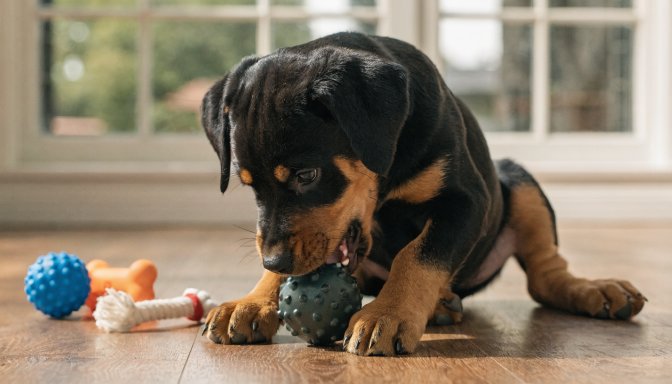
Frozen toys and damp washcloths work like nature’s ice packs, numbing sore gums and providing immediate relief during those uncomfortable teething weeks.
Both options satisfy your pup’s natural urge to chew while keeping discomfort at bay.
Durable Toys For Rottweilers
Consider these essential options:
- Tough rubber or nylon toys that withstand powerful bites without crumbling
- Reinforced construction designs featuring extra textures for sensory satisfaction
- Frozen toys providing soothing gum relief during discomfort
Skip toys with small detachable parts—choking hazards aren’t worth the risk.
Always inspect toys regularly for damage and replace worn items immediately. Your Rottweiler’s strong jaw demands appropriately sized, sturdy outlets. This investment protects both their safety and your furniture.
Frozen Options For Relief
Freezing teething toys transforms them into powerful pain-management tools. You’ll discover that frozen options work brilliantly for soothing sore gums during your Rottweiler’s teething phase.
What Makes Frozen Relief Effective
Cold numbs irritated tissues—similar to how ice packs work on human injuries. Your puppy’s swollen gums get temporary relief through this natural mechanism.
Best Frozen Choices:
- Rubber teething toys (most durable for powerful chewers)
- Frozen peanut butter treats (puppy-safe varieties only)
- Dental chews designed for freezing
- Yogurt-based frozen treats
Critical Safety Tips
Always supervise frozen toy sessions. Rotating different toys keeps your Rottweiler engaged and prevents boredom.
Watch for breakage or splintering—damaged toys pose choking hazards. Remove toys once they thaw considerably.
These frozen options provide comfort while supporting healthy chewing habits. Your teething Rottweiler will appreciate the relief.
Frozen Treats for Rottweilers: Cooling Relief Options
Several excellent frozen treat options can dramatically ease your Rottweiler’s teething discomfort.
When your puppy starts losing baby teeth, frozen treats become your secret weapon. They numb sore gums and reduce drooling—a win-win situation.
Your Best Frozen Options:
- Homemade blends: Mix bananas or blueberries with yogurt, then freeze in ice cube trays for budget-friendly relief.
- Commercial treats: Pre-made frozen dog treats contain dental-health ingredients specifically formulated for teething puppies.
- Simple alternatives: Freeze damp washcloths or sponges for hours—they’re safe, reusable cooling aids.
Safety First
Always supervise your Rottweiler during frozen treat time. Watch for choking hazards and monitor their digestion afterward.
These cooling options reduce inflammation naturally, supporting your pup’s oral development during this challenging phase. Your dedication pays off—soon those adult teeth arrive!
Natural Pain Relief for Teething Rottweilers
You’ve got several natural options to tackle your Rottweiler’s teething pain effectively.
Frozen toys, herbal gels, and cold cloths all work by numbing sore gums—mimicking how puppies naturally seek cool surfaces to self-soothe.
Ready to explore which method works best for your pup?
Frozen Toys For Relief
One of the simplest—yet most effective—ways to comfort your teething Rottweiler is with frozen toys. These chilled companions numb sore gums while satisfying your pup’s natural urge to chew.
What Makes Frozen Toys Work
Frozen toys leverage cold therapy—a technique veterinarians recommend for pain relief. The numbing sensation reduces inflammation and soothes discomfort during this challenging developmental stage.
Best Frozen Toy Options:
- Rubber or fabric toys filled with water, then frozen for safe, durable chewing
- Frozen vegetables like carrots or peas—nutritious alternatives that ease gum pain
- Specialized teething toys designed specifically for large breed puppies
Supervision Matters
Always watch your Rottweiler during frozen toy use. Pieces can break off, creating choking hazards.
Beyond pain relief, frozen toys encourage healthy chewing habits, promoting stronger dental health throughout your dog’s life.
Herbal Teething Gels
While frozen toys offer quick relief, herbal teething gels provide a natural alternative—one that’s been used for centuries in traditional medicine to soothe inflamed tissues.
Why They Work
You’ll find that many herbal gels contain powerhouse ingredients like chamomile and calendula. These plants reduce inflammation and calm irritated gums naturally.
When your puppy’s teeth push through, these botanicals ease discomfort greatly.
Choosing the Right Product
Here’s what matters: always select gels formulated specifically for dogs. Human products contain harmful ingredients that aren’t safe for your Rottweiler.
Your vet can recommend trusted brands and application schedules.
Application Benefits
Regular use helps your puppy shift smoothly to adult teeth.
You’ll notice improved comfort levels and healthier gum development.
Apply as directed—consistency matters for maximum relief.
Cold Cloth Soothing
Cold, damp cloth’s work wonders for teething Rottweilers—and they’re one of the simplest, most effective remedies you can use. Here’s why they’re so effective:
- Soothe sore gums with the cooling sensation that reduces inflammation naturally
- Distract from discomfort so your pup copes easier during this challenging phase
- Enhance pain relief by freezing the cloth briefly before offering it
Your Rottweiler’s teeth erupt over weeks, causing significant oral discomfort. The cold temperature numbs sensitive gum tissue while offering a safe chew outlet.
Rotate frozen cloths with other teething toys to maintain engagement and maximize relief throughout the day.
Stay vigilant though. Monitor your puppy closely while they chew. Make certain they don’t ingest cloth fibers—a potential choking hazard.
This simple solution transforms teething from miserable to manageable.
How to Redirect Inappropriate Chewing Behavior
- Provide dog chew toys specifically designed for teething.
- Praise enthusiastically when your puppy selects correct items.
- Offer high-value treats as positive reinforcement.
When your Rottweiler nips your hands or clothing, firmly say “no” and immediately redirect to an acceptable toy. Remove tempting off-limit items from reach—prevention beats correction every time.
Prevention beats correction every time—remove tempting items and redirect nipping to acceptable toys with a firm “no.”
Establish Consistency:
Maintain a structured playtime routine.
Monitor your puppy’s behavior closely.
Engage in obedience training to reinforce commands.
This satisfies their natural chewing instincts while establishing boundaries.
Your Rottweiler learns what’s acceptable through clear, consistent messaging combined with rewarding good choices.
Building Bite Inhibition Early
Teach your Rottweiler that mouths have limits—starting now. Bite inhibition is the ability puppies develop to control jaw pressure. This skill prevents serious injuries as your Rottweiler grows stronger.
Early Training Methods
- Use a loud “OW!” when they nip—signaling that bites cause pain.
- Offer treats and praise when your puppy backs off after nipping.
- Redirect biting to appropriate chew toys consistently.
Why It Matters
Strong bite inhibition protects your family and visitors. Rottweilers naturally explore using their mouths, but teach your puppy the difference between play and aggression.
If escalation occurs after correction, withdraw from play or use your crate to help them calm down.
Consistency is essential. Each interaction reinforces lessons puppies need to swallow—literally and figuratively. You’re building a well-mannered adult dog.
Puppy-Proofing Your Home for Safe Teething
Your Rottweiler’s teething phase—typically spanning from 3 to 7 months old—transforms your pup into a curious explorer with an unstoppable urge to chew.
Securing Your Space
Puppy-proofing your home prevents disaster. Remove electrical cords, small items, and toxic plants from reach.
Puppy-proofing your home prevents disaster by removing electrical cords, small items, and toxic plants from your Rottweiler’s reach.
Use baby gates to restrict access to furniture-heavy areas. Store cleaning supplies, medications, and chemicals securely—puppies nibble containers seeking relief from teething discomfort.
Creating Designated Chew Zones
Establish designated chew zones throughout your home. Stock these areas with appropriate toys encouraging positive chewing behavior.
This protects your belongings while satisfying your Rottweiler’s natural instincts.
Daily Vigilance
Regularly inspect floors for hazards. Pick up shoes, kid’s toys, and small objects that pose choking risks.
Your vigilance during this critical developmental window safeguards your pup’s health and your home’s integrity.
Feeding Your Rottweiler During Teething
You’ll notice your teething Rottweiler’s appetite might dip—and that’s totally normal when their gums ache from emerging adult teeth.
Your job is keeping them nourished through soft food options, strategic nutrition choices, and careful monitoring of what they actually consume.
Let’s explore how to tackle reduced appetite, maximize nutrition intake, and make mealtime comfortable during this challenging growth phase.
Soft Food Options For Puppies
When those tiny teeth start breaking through your Rottweiler’s gums, mealtimes become challenging. Your puppy’s adult teeth are erupting—a process lasting several months—and hard kibble causes real discomfort. Soft food options ease this change considerably.
Optimal Soft Food Choices
You’ll find several excellent alternatives:
- Canned puppy food provides complete nutrition with a gentle texture
- Soaked dry kibble softens within minutes, maintaining nutritional balance
- Homemade purees from cooked sweet potatoes or chicken soothe irritated gums
Hydration Benefits
Wet food helps tremendously. If your puppy’s appetite drops temporarily, wet options maintain hydration and nutrition simultaneously.
The moisture content supports overall health during this demanding phase.
Always consult your veterinarian about personalized soft food recommendations. They’ll guarantee your Rottweiler receives proper nutrition while those teeth emerge painlessly.
Nutrition During Teething Phase
As those adult teeth push through your Rottweiler’s gums, their nutritional needs actually *increase*—not decrease.
Why Nutrition Matters During Teething
Your puppy’s body works overtime. Growing 42 adult teeth demands serious fuel.
That’s where smart nutrition comes in.
Key Nutrients for Healthy Teeth
Calcium and phosphorus? Non-negotiable.
These minerals literally build strong teeth and bones.
Think of them as construction materials your puppy needs daily.
Practical Feeding Strategies
Soft foods reduce jaw pain while delivering nutrition.
Wet food or soaked kibble makes eating comfortable.
Always keep fresh water available—teething causes excessive drooling and dehydration risks.
Professional Guidance
Your veterinarian can recommend specific supplements or prescription foods.
They’ll tailor nutrition to your individual puppy’s needs, ensuring ideal development through this demanding phase.
Managing Reduced Appetite Issues
Teething discomfort doesn’t just make your Rottweiler’s gums sore—it can practically shut down their desire to eat. Your puppy’s appetite drops considerably during this phase. Here’s how to help:
Strategies to Encourage Eating
- Soften meals: Soak kibble in warm water or broth until mushy.
- Offer wet food: Canned options require minimal chewing effort.
- Provide frozen treats: Chilled food soothes inflamed gums while tempting your pup.
Maintain Routine
Even when your puppy’s appetite wanes, stick to consistent feeding schedules. This establishes routine and encourages eating.
Don’t skip meals hoping they’ll catch up later.
When to Worry
Persistent appetite issues beyond teething warrant veterinary attention.
Combined symptoms—lethargy, vomiting, or behavioral changes—signal underlying problems. Your vet can rule out infections or complications.
Establishing a Dental Care Routine During Teething
Your Rottweiler’s baby teeth—all 28 of them—will eventually make way for 42 permanent adult teeth, so starting early matters.
Building Your Dog Dental Care Routine
You’ll want to establish a dental care routine now—before those adult teeth arrive.
Here’s why: puppies who get comfortable with mouth handling accept dental work better as adults.
Getting Started
- Use dog-specific toothbrushes and enzymatic toothpaste (never human products—they’re toxic)
- Brush 2-3 times weekly minimum
- Start with short sessions: 30 seconds builds familiarity
Beyond Brushing
Dental chews and toys aren’t optional—they’re essential.
They remove plaque while satisfying your pup’s natural chewing instinct.
Schedule yearly veterinary dental check-ups to catch problems early.
Your consistency now prevents expensive issues later.
Signs Your Rottweiler Needs Veterinary Attention
While most teething discomfort is normal, certain warning signs shouldn’t be ignored.
Your Rottweiler’s teeth begin erupting around three weeks old, completing by seven months. Watch for these red flags requiring veterinary attention:
Your Rottweiler’s teeth erupt around three weeks old, completing by seven months. Watch for red flags requiring veterinary attention.
- Infection indicators: Red, swollen gums with discharge demand immediate vet for advice
- Excessive bleeding: Persistent or uncontrolled bleeding during tooth loss signals problems
- Behavioral changes: Constant pain, fussiness, or lost appetite suggests complications
When to Act
Retained baby teeth—teeth refusing to fall out—can cause overcrowding and misalignment. Don’t wait; schedule a vet appointment.
Bleeding that won’t stop needs immediate evaluation.
Your puppy’s discomfort shouldn’t last weeks. If pain persists beyond normal teething phases, get professional help.
Regular dental examinations prevent tartar buildup and catch issues early. Trust your instincts. You know your Rottweiler best.
What to Expect After Teething Ends
By around six to seven months, your Rottweiler puppy’s mouth will transform completely. You’ll notice your pup’s full set of 42 adult teeth has arrived—a massive upgrade from those tiny puppy teeth! Here’s what changes:
| Aspect | During Teething | After Teething |
|---|---|---|
| Discomfort Level | High; sore gums | Minimal; exploration focus |
| Chewing Behavior | Pain-driven relief | Instinctual environmental exploration |
| Dental Needs | Teething toys | Dental maintenance routine |
You’re not done yet, though. Those shiny adult teeth require ongoing care. Establish regular dental routines immediately—brushing, appropriate chew toys, and veterinary check-ups around 12 months old prevent tartar buildup and guarantee proper alignment. Your Rottweiler’s chewing instinct remains strong, so redirect that energy toward dental-health-promoting toys. Think of maintenance like brushing your own teeth—consistent effort prevents bigger problems later. Ready for this next phase?
Retained Baby Teeth: What Rottweiler Owners Should Know
Sometimes—despite nature’s best efforts—those puppy teeth don’t want to leave the party. You might notice your Rottweiler still has baby teeth alongside emerging adult teeth. This condition, called retained baby teeth, happens when adult teeth fail to push out the babies properly.
Signs You Should Watch For
Keep an eye out for these telltale indicators:
- Difficulty chewing or reluctance to eat
- Visible baby teeth crowding adult teeth
- Gum irritation or mild inflammation around tooth areas
Why This Matters
Retained baby teeth create overcrowding, causing misalignment of your pup’s permanent teeth. This dental problem can lead to serious complications down the road.
Your Next Step
Schedule a veterinarian for advice immediately. Your vet may recommend removing those stubborn babies to guarantee proper alignment and prevent future dental issues.
Building Healthy Adult Teeth: The Teething Phase
As your Rottweiler grows from a puppy into an adult dog, they’re trading in their baby teeth for a full set of permanent chompers—and it’s quite the dental transformation.
During this critical teething phase, your pup develops 42 adult teeth to replace their original 28 baby teeth. This process begins around 4 to 5 months of age and typically completes by 6 months when all baby teeth fall out.
| Teething Stage | What Happens |
|---|---|
| 2-4 weeks | Baby teeth emerge |
| 12-16 weeks | Adult teeth start coming in |
| 6 months | All baby teeth should be gone |
| 12+ months | Full adult set established |
Supporting Development
You’ll notice increased chewing, red gums, and drooling. Provide appropriate chew toys and dental treats—they’ll soothe sore gums while promoting healthy adult teeth. Proper dental care now prevents future problems. Adult dogs deserve strong, healthy smiles!
Supporting Long-Term Dental Health in Adult Rottweilers
Three critical years—that’s roughly how long your adult Rottweiler’s teeth will thrive with proper care, or decline without it.
Your Rottweiler’s dental health depends on consistent effort. You’ll establish routines that protect those powerful jaws for life. Here’s what works:
- Annual vet check-ups catch tartar buildup and misalignment early
- Dog-specific toothbrushes and enzymatic toothpaste maintain oral hygiene safely
- Dental chew toys satisfy natural instincts while cleaning teeth
A balanced, nutrient-rich diet strengthens teeth and gums considerably. Your adult Rottweiler’s jaw strength demands quality nutrition.
Start now. Periodontal disease prevention isn’t glamorous, but it’s essential.
Regular brushing? It takes minutes. Professional cleanings? They add years. You’re investing in healthier breath, fewer complications, and genuine comfort for your loyal companion.
Frequently Asked Questions
What Age Do Rottweiler Puppies Stop Teething?
Your Rottweiler puppy will stop teething around 6 months old when they’ve developed all 42 adult teeth. You’ll notice the discomfort and excessive chewing decrease as their permanent teeth fully emerge between 4 to 5 months.
How Can I Ease My Puppy’s Teething Pain?
You’ll soothe sore gums, you’ll reduce inflammation, you’ll prevent destructive chewing by offering soft toys, using frozen toys, and applying vet-recommended gels. You’ll redirect inappropriate chewing toward proper outlets consistently.
What Age Is Teething the Worst for Puppies?
Your puppy experiences the worst teething between 4 to 5 months old. During this phase, baby teeth fall out and adult teeth emerge, causing intense discomfort, excessive chewing, and nipping behaviors that’ll peak considerably.
What Time of Day Is Teething Pain the Worst?
Studies show 70% of puppy owners report peak teething discomfort during evening hours. You’ll notice your Rottweiler experiences worse pain during late afternoon and night when fatigue combines with gum sensitivity, making them restless and vocal.
Conclusion
You’ve survived the chaos—congratulations! Your pup’s adult teeth are finally in, and you’re not bleeding anymore. Sure, you’ll replace furniture for years, but hey, at least you now understand why your Rottie gnawed through everything. Supporting those chompers with proper care pays off big. Adult dental health? You’ve got this. Your vet’s impressed. Your furniture? Still recovering.