Some of the links in this post are affiliate links. This means we may earn a small commission if you make a purchase through these links—at no extra cost to you. We only recommend products and tools that we genuinely believe will help you with your Rottweiler.
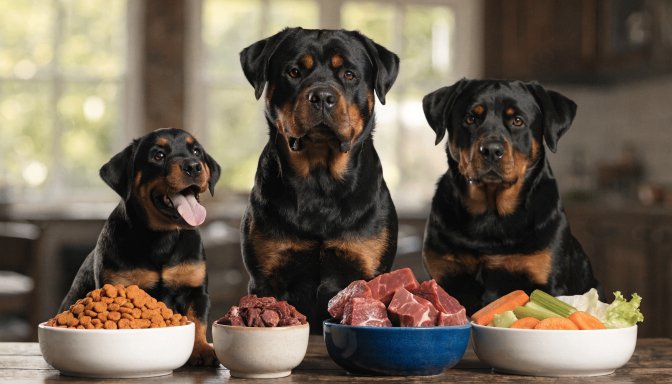
Your Rottweiler’s nutritional needs shift dramatically across life stages. Puppies require 25-30% protein and balanced calcium-phosphorus ratios (1.2:1 to 1.5:1) for bone development. Two-year-olds thrive on 2-3% of body weight daily in high-quality proteins with omega fatty acids. Seniors need less calories—around 2% of ideal weight—plus glucosamine and fish oil for joint mobility. Each stage demands different meal frequencies, portion sizes, and nutrient profiles. What you’re feeding matters less than matching their current life phase. Understanding these distinctions reveals the specific strategies transforming your dog’s health trajectory.
- Key Takeaways
- What Growing Rottweilers Actually Need
- Why Life Stage Matters More Than Age Alone
- Rottweiler Puppy Nutrition: Building a Strong Foundation
- Calcium, Phosphorus, and DHA: Critical Nutrients for Puppy Bone Development
- Protein Ratios for Puppies: How Much and Why It Matters
- The Right Protein Range
- Why Protein Matters
- The Overfeeding Trap
- Smart Feeding Strategy
- Puppy Feeding Frequency and Portion Sizes by Age
- Evaluating Puppy Formulas: What to Look For Beyond the Label
- Switching Your Puppy to Adult Food: The Right Way
- Adult Rottweiler Nutrition: Calorie Needs and Macronutrients
- Building Muscle Without Overfeeding Your Adult Rottweiler
- Joint Support: Glucosamine and Chondroitin for Active Dogs
- How Many Times a Day Should Your Adult Rottweiler Eat?
- Avoid These 5 Adult Feeding Mistakes
- Why Your Adult Rottweiler Might Be Gaining Weight
- Senior Rottweiler Nutrition: When and How to Adjust
- Keeping Your Senior Rottweiler’s Joints Healthy and Mobile
- Lower-Calorie Senior Formulas: Preventing Obesity in Aging Dogs
- Why Senior Rottweilers Have Sensitive Stomachs and How to Help
- When Your Rottweiler Needs a New Diet: Signs to Watch
- Kibble, Wet Food, and Raw: Which Format Works Best for Your Dog?
- Animal vs. Plant Proteins: Digestibility Across Every Life Stage
- Glucosamine, Omega-3s, and Probiotics: When Each Life Stage Needs What
- Breeding Rottweilers: Nutrition for Pregnant and Nursing Females
- When to Talk to Your Vet About Diet Changes
- Cost-Effective Feeding Strategies Across Your Rottweiler’s Lifetime
- Frequently Asked Questions
- Conclusion
Key Takeaways
- Puppies need 8-10% of body weight daily with 25-30% protein for muscle development and proper bone formation.
- Adult Rottweilers require 2-3% of ideal body weight with high-quality proteins and balanced calcium-phosphorus ratios (1.2:1 to 1.5:1).
- Joint health requires glucosamine (500+ mg/cup) and chondroitin (400+ mg/cup) for cartilage repair and lubrication.
- Senior Rottweilers (7-8 years) need easily digestible proteins, smaller portions, and fish oil for joint mobility and inflammation reduction.
- Transition diets gradually over 7-10 days, reducing meal frequency from three to two daily by 24 weeks of age.
What Growing Rottweilers Actually Need
Your growing Rottweiler’s got big shoes to fill—literally.
High Protein Powerhouse
Your pup needs at least 25-30% protein content in their diet. Why? Muscle development demands it. Quality animal proteins build the strong frame your Rottweiler requires for their 80-135 pound adult size.
Your Rottweiler needs 25-30% protein to build the strong frame required for their 80-135 pound adult size.
Balanced Nutrition Essentials
You’ll want omega-3 and omega-6 fatty acids in proper ratios. Fish oil sources work wonderfully here. They support healthy skin and coat development during those vital growth months.
Joint Support Foundation
Here’s where glucosamine and chondroitin become your best friends. These ingredients protect against hip and elbow dysplasia—common Rottweiler concerns. Adding them now prevents costly problems later.
Energy Control
Feed approximately 3-4% of their body weight daily. Include nutrient-dense carbohydrates like sweet potatoes or brown rice. This approach fuels active puppies while preventing excessive weight gain.
Why Life Stage Matters More Than Age Alone
Because a Rottweiler’s body changes dramatically throughout their life, one-size-fits-all feeding just doesn’t cut it. You’re not just feeding a dog—you’re fueling a living, evolving organism with shifting needs.
Why Age Numbers Mislead
A two-year-old Rottweiler’s nutrition demands differ vastly from a two-year-old human’s. Their life stage—not just their birthday—determines what they need.
A young dog building massive frames requires different fuel than a senior maintaining muscle mass.
The Real Game-Changer
Your Rottweiler’s metabolism, activity level, and body composition constantly shift. Puppies need growth-supporting calories. Adults need balanced nutrition for muscle maintenance.
Seniors need joint-supportive ingredients with lower calories.
Matching life stage to nutrition isn’t optional—it’s essential. You’re investing in longevity, mobility, and quality of life.
Rottweiler Puppy Nutrition: Building a Strong Foundation
Puppies aren’t just tiny adults—they’re growth machines running on overdrive. Your Rottweiler puppy needs approximately 8-10% of their body weight in calories at eight weeks—that’s fuel for rapid development.
Here’s what matters most:
The Protein Priority
Animal proteins should dominate your puppy’s bowl. Real meat as the primary ingredient builds muscle and strength during this critical phase. Quality kibble with high-protein content creates that muscular Rottweiler physique you’re aiming for.
Joint Protection Strategy
Don’t overlook joint-supporting ingredients. Glucosamine and omega-3 fatty acids (healthy fats from fish) protect developing joints from stress. Large-breed formulas manage growth rates carefully—preventing bones from developing too quickly reduces hip dysplasia risk considerably.
Feeding Flexibility
Mix quality kibble with wet food. Better palatability encourages consumption, especially for picky eaters.
Calcium, Phosphorus, and DHA: Critical Nutrients for Puppy Bone Development
Three critical minerals and nutrients—calcium, phosphorus, and DHA—aren’t optional extras for your Rottweiler puppy’s diet; they’re the building blocks of a strong, healthy skeleton.
Calcium & Phosphorus: The Dynamic Duo
Your puppy needs 1-2% calcium to support rapid bone growth.
Your Rottweiler puppy needs 1-2% calcium daily to support rapid bone growth and skeletal development.
But here’s the catch: phosphorus must balance it perfectly—aim for a 1.2:1 to 1.5:1 calcium-to-phosphorus ratio. This partnership prevents skeletal problems.
DHA: Brain Power Fuel
This omega-3 fatty acid—found in fish oil or algae—sharpens your puppy’s cognitive function and vision development during those critical early months.
The Excess Danger
Too much calcium? That’s a real threat. Excessive intake triggers developmental orthopedic diseases (DOD), causing joint damage.
Large-breed puppy formulas nail these ratios perfectly, so follow your vet’s guidance closely.
Protein Ratios for Puppies: How Much and Why It Matters
How’s your Rottweiler pup growing so fast? That rapid growth demands serious nutritional support—specifically, protein-rich fuel.
The Right Protein Range
Your puppy needs 22-32% protein in their diet. This range supports:
- Rapid muscle development
- Strong immune function
- Ideal bone growth
Why Protein Matters
Protein builds everything—muscles, tissues, enzymes.
Your pup’s body breaks down protein into amino acids, the building blocks for growth.
The Overfeeding Trap
Here’s the tricky part: too much protein causes too-fast growth.
Rapid development stresses developing joints, potentially causing long-term damage.
Smart Feeding Strategy
Choose high-quality sources: chicken, beef, or fish.
These provide complete amino acid profiles.
Monitor portions based on your pup’s ideal body weight—not their current size.
Add glucosamine and chondroitin for joint protection as muscle mass increases.
Balance wins every time.
Puppy Feeding Frequency and Portion Sizes by Age
You’ll need to master three critical feeding decisions during your Rottweiler puppy’s first six months: how often you’re putting food in the bowl, how much goes in it, and when you’re making the switch to adult meals.
Getting these right means your pup grows strong without developing joint problems—a real concern for large breeds.
Ready to discover the exact portions and schedules that’ll keep your Rottweiler thriving?
Feeding Frequency For Puppies
Since your Rottweiler puppy’s body is working overtime—growing bones, building muscle, and developing organs—their nutritional needs shift dramatically during those first months.
You’ll notice how quickly puppies consume calories! Here’s how nutrition that supports healthy development changes:
- 7-10 weeks: Feed 8-10% of body weight daily—your puppy needs maximum fuel for rapid growth.
- 10-16 weeks: Reduce to 7-8% as growth continues but you’re preventing excessive weight gain.
- 16+ weeks: Gradually decrease portions while maintaining lean muscle mass through consistent, quality nutrition.
Rottweilers are large-breed puppies requiring careful feeding schedules.
Their developing joints need steady, controlled growth—not rapid weight gains that stress bones.
You’re fundamentally creating the foundation for your dog’s entire life.
Think of this period as critical programming for metabolic health and muscle development.
Portion Control And Growth
Nailing the right portion sizes is where theory meets practice—and it’s the difference between a healthy pup and one struggling with joint problems down the road.
You’ll adjust portion control based on your puppy’s ideal body weight—not current weight. Here’s your feeding roadmap:
- 7-10 weeks: 8-10% of body weight daily
- 10-16 weeks: 7-8% of body weight daily
- 16-20 weeks: 6-7% of body weight daily
- 24-36 weeks: 4-5% of body weight daily
This gradual reduction prevents overfeeding while supporting healthy bone development.
You’re fundamentally teaching their metabolism to work efficiently.
Monitor your pup closely: ribs shouldn’t protrude visibly, but you should feel them easily.
Regular assessments guarantee you’re delivering nutrition without overfeeding—the sweet spot for sustainable growth.
Transitioning To Adult Meals
The shift from puppy to adult feeding is where patience meets precision—and it’s not something you want to rush. Your Rottweiler’s digestive system needs gradual adjustment to handle fewer, larger meals efficiently.
Keys to Successfully Shifting:
- Reduce meal frequency from three to two daily meals by 24 weeks.
- Lower calorie intake from 5-6% to 2-3% of ideal body weight.
- Maintain high-quality animal protein to preserve lean muscle development.
Your dog’s metabolism alters dramatically during this phase. Two meals daily promotes better digestion and sustains energy throughout the day.
Don’t suddenly switch everything at once—blend old and new food over 7-10 days instead. This measured approach prevents digestive upset while establishing healthy adult eating habits.
Your Rottweiler’s joints will thank you for controlling growth rate carefully.
Evaluating Puppy Formulas: What to Look For Beyond the Label
You’ve got three critical factors working together when you’re picking the right puppy formula for your Rottweiler.
First, you’ll want protein quality and digestibility—meaning your pup actually absorbs those nutrients, not just eats them.
Second, joint support during growth matters hugely since large breeds like yours face real dysplasia risks (that’s when hip and elbow joints develop poorly).
And third, controlled calorie balance keeps your fast-growing pup from ballooning too quickly, which strains those developing bones—a common mistake many owners make without realizing it.
Protein Quality and Digestibility
When you’re standing in the pet food aisle squinting at ingredient lists, here’s what actually matters—your Rottweiler puppy’s body is literally building itself from what you feed it.
Why Protein Quality Matters
Your pup needs protein for muscle development and tissue repair. But not all proteins are created equal. Here’s what separates the winners from the rest:
- Named meat sources (chicken, beef, fish) deliver complete amino acids—the building blocks your puppy requires.
- High-quality animal proteins provide superior digestibility, meaning your puppy absorbs more nutrients, wastes less.
- Digestible protein sources reduce digestive strain, preventing uncomfortable bloating and supporting gut health.
Look beyond vague terms like “meat meal.” Named ingredients signal transparency and nutritional superiority.
Your Rottweiler’s growing muscles demand the best—and they’ll thank you with boundless energy and excellent development.
Joint Support During Growth
While quality protein builds muscle, your Rottweiler’s joints need something equally important—protection.
Large-breed puppies grow rapidly, stressing their developing bones and cartilage. You’ll want joint-supporting ingredients like glucosamine and chondroitin, which repair wear-and-tear damage before it becomes permanent. These compounds work like tiny repair crews inside your pup’s joints.
Omega-3 fatty acids fight inflammation naturally. They’re especially essential because Rottweilers face hip and elbow dysplasia risk—a genetic vulnerability affecting 20% of the breed historically.
| Key Ingredient | Benefit | Target Level |
|---|---|---|
| Glucosamine | Cartilage repair | 500+ mg/cup |
| Chondroitin | Joint lubrication | 400+ mg/cup |
| Omega-3s | Inflammation control | 0.8%+ |
Your puppy’s formula should contain high-quality animal protein as the foundation while delivering these protective compounds simultaneously. This combination shields developing joints during those vital growth months.
Controlled Calorie Balance Matters
Because Rottweilers pack on pounds faster than other breeds, their calorie intake during puppyhood isn’t just about preventing chubby cheeks—it’s about protecting their futures.
Why Calories Matter for Joint Health
You’re fundamentally building a foundation here. Excess weight during growth phases strains developing joints—a problem that haunts Rottweilers into adulthood.
Here’s what you should monitor:
- Calorie density: Choose large-breed formulas with controlled calories, not adult food scaled down.
- Growth rate: Slow, steady weight gain prevents skeletal stress and joint degradation.
- Nutrient timing: Omega-3 fatty acids paired with controlled portions reduce inflammation naturally.
Your puppy’s metabolism differs from adult dogs. Feed appropriate portions based on age and weight targets—your vet provides specific guidelines.
A controlled calorie balance isn’t restrictive; it’s protective. You’re investing in mobility, comfort, and longevity.
Switching Your Puppy to Adult Food: The Right Way
Your Rottweiler’s nutritional needs shift dramatically as they mature—and you’ve got to adjust their diet too.
The Change Timeline
Around 12-18 months, your pup’s ready for the switch. Their body needs less protein now—roughly 24-26% instead of the puppy’s 28-30%.
The 7-10 Day Blend
Here’s the trick: mix increasing adult food with decreasing puppy food.
This gradual change prevents digestive upset and keeps their stomach happy.
Start with 25% adult food, then bump it up every few days until you’ve fully switched.
Monitor Everything
Watch their weight and energy levels closely. Adjust portions to maintain that lean, healthy physique adult Rottweilers need.
Choose high-quality, meat-based formulas packed with glucosamine and omega-3 fatty acids—essentials for protecting those large joints and skin.
Adult Rottweiler Nutrition: Calorie Needs and Macronutrients
You’ve got to nail three critical areas to keep your adult Rottweiler thriving: protein quality fuels those powerful muscles, calorie balance prevents unwanted weight gain (which strains their joints), and essential fats protect their skin and coat.
Your dog needs roughly 2–3% of their ideal body weight in daily calories, with high-quality animal proteins like chicken or beef making up 25–30% of their diet.
Don’t forget omega-3 and omega-6 fatty acids—they’re not luxuries, they’re necessities for that signature shiny coat and joint health your Rottweiler deserves.
Protein Quality And Muscle Maintenance
When it comes to keeping your Rottweiler’s muscles strong and healthy, protein isn’t just another ingredient—it’s the building block your dog literally can’t live without.
Your adult Rottweiler needs protein quality that comes from named animal sources. Think chicken, beef, or fish—not vague “meat by-products.” Here’s what matters most:
- Aim for 25-30% protein content minimum
- Choose high-digestibility formulations for efficient nutrient absorption
- Include joint-supporting ingredients like glucosamine and chondroitin
These components work together powerfully. Quality protein rebuilds muscle fibers daily.
Muscle maintenance requires consistent, bioavailable amino acids—the protein building blocks your dog’s body actually uses.
Without proper protein quality, your Rottweiler loses muscle tone, strength declines, and joint stress increases.
You’re investing in longevity when you prioritize premium protein sources. Your dog’s powerful frame depends on it.
Balancing Calories For Weight Management
Because Rottweilers are prone to obesity—a condition that strains their joints and shortens their lifespan—calorie balance isn’t optional, it’s essential.
Your adult Rottweiler needs 2-3% of their ideal body weight daily. Highly active dogs require more; those needing weight management need less.
Here’s the catch: calorie counting alone won’t cut it.
Quality Over Quantity
Focus on high-quality nutrients rather than just calories. Grain-free dog food options can support muscle while managing weight effectively.
The Macronutrient Sweet Spot
Balance protein, fat, and calorie density strategically. Include healthy fats—omega-3 and omega-6—for skin health and sustained energy.
This approach prevents excessive weight gain while maintaining lean muscle.
Regular Reality Checks
Assess your dog’s food effectiveness monthly. Track weight changes.
Adjust portions based on actual results, not assumptions. Your vet can help refine your weight management strategy.
Essential Fats And Joint Support
Your Rottweiler’s joints face real pressure. These powerful dogs need strategic nutritional support to combat their predisposition to hip and elbow dysplasia. Essential fats aren’t luxuries—they’re necessities for thriving.
Here’s what matters most:
- Omega-3 and omega-6 fatty acids maintain skin elasticity and reduce joint inflammation naturally.
- Joint-supporting ingredients like glucosamine and chondroitin rebuild cartilage and improve mobility.
- High-quality fat sources from fish oil and flaxseed enhance nutrient absorption dramatically.
These aren’t just buzzwords. Omega-3s actively reduce inflammatory responses in aging joints. Chondroitin works as a shock absorber—literally cushioning bone surfaces.
You’re investing in movement, comfort, and longevity. Quality fats plus targeted joint support creates the foundation for an active, pain-free life.
Building Muscle Without Overfeeding Your Adult Rottweiler
As one of the most powerful dog breeds—originally developed in Germany during the Roman era for herding cattle and pulling carts—Rottweilers need smart nutrition to build lean muscle without packing on excess weight.
The Calorie-to-Activity Balance
You’ll want to feed your Rottweiler 2-3% of their ideal body weight daily. Adjust portions based on their activity level. This prevents overfeeding while supporting muscle maintenance.
Protein: Your Muscle-Building Foundation
High-quality animal proteins are essential. They’re the building blocks your dog needs. Aim for 25-30% protein content in their food. This supports lean muscle development effectively.
Maintaining a Lean Body
Monitor your Rottweiler’s weight regularly. You should feel their ribs easily.
Combine proper portions with consistent exercise. This approach builds muscle while keeping them trim and healthy.
Joint Support: Glucosamine and Chondroitin for Active Dogs
You’ve likely noticed your active Rottweiler slowing down after vigorous play—and that’s where glucosamine and chondroitin enter the picture.
These compounds work like maintenance crews for your dog’s cartilage, cushioning joints and reducing inflammation at the cellular level.
As your Rottweiler ages, these supplements become increasingly essential for maintaining the mobility and quality of life your loyal companion deserves.
Joint Health Development Stages
Two essential nutrients—glucosamine and chondroitin—form the foundation of joint health for Rottweilers, and here’s why they matter so much: these dogs carry significant muscle mass on their frames, which creates real stress on their joints throughout their lives.
Your Rottweiler needs targeted support during critical growth phases. Consider these joint-supporting ingredients:
- Glucosamine rebuilds cartilage and prevents deterioration in young, active pups.
- Chondroitin draws nutrients into cartilage, boosting flexibility and mobility.
- High-quality protein fuels muscle development alongside joint protection.
During puppyhood, rapid growth demands extra care. Hip and elbow dysplasia risk peaks here—making joint health vital.
As your dog matures, consistent glucosamine and chondroitin intake maintains cartilage integrity.
Senior Rottweilers benefit most from established joint health habits. Quality dog food containing these joint-supporting ingredients isn’t optional—it’s important prevention.
Glucosamine and Chondroitin Benefits
Glucosamine and chondroitin work like a maintenance crew for your Rottweiler’s joints—they’re not just supplements, they’re cartilage protectors.
How They Work Together
Glucosamine rebuilds cartilage while chondroitin attracts water to joints, enhancing shock absorption.
Think of chondroitin as a sponge—it keeps cartilage hydrated and flexible.
Real Benefits for Your Dog
You’ll notice improved mobility, especially as your Rottweiler ages.
These ingredients slow osteoarthritis progression, which matters tremendously for large breeds prone to joint stress.
Working and sporting Rottweilers particularly benefit from this dynamic duo.
Where to Find Them
Quality large-breed dog foods already contain glucosamine and chondroitin.
You’re fundamentally investing in your dog’s active lifestyle—whether that’s daily walks or rigorous training sessions.
Supporting joint health now prevents costly problems later.
Supporting Long-Term Mobility
Your Rottweiler’s joints face real pressure—especially when they’re young, growing fast, and enthusiastic to play hard. You’ll want to support their long-term mobility through strategic nutrition choices.
Joint-Supporting Ingredients Make the Difference
Consistent feeding of quality diets containing joint-supporting ingredients like glucosamine and chondroitin helps protect developing cartilage during critical growth phases.
Here’s what you’re investing in:
- Cartilage protection during rapid bone development
- Inflammation reduction from omega-3 fatty acids working alongside glucosamine
- Hip dysplasia prevention—a breed-specific concern you can actually influence
When you pair these supplements with omega-3 fatty acids, you’re creating a thorough defense system.
Your dog’s joints stay more flexible. Movement stays easier. Play stays pain-free longer.
Think of it this way: you’re not just feeding your Rottweiler today. You’re investing in their active, comfortable years ahead.
How Many Times a Day Should Your Adult Rottweiler Eat?
How often should you feed your adult Rottweiler? Two meals daily is ideal for adult Rottweilers. This feeding schedule supports optimal nutrition and digestive health while managing their weight effectively.
Why Two Meals Work Best
Splitting food into two portions:
- Prevents overeating and obesity
- Aids digestion throughout the day
- Maintains steady energy levels
Portion Guidelines
Each meal should contain high-quality dog food equaling roughly 2-3% of your Rottweiler’s ideal body weight. Active dogs need extra calories—think of it like fueling an athlete.
Less active Rottweilers require fewer calories.
The Timing Advantage
Consistent feeding schedules establish routine. Your dog’s digestive system thrives on predictability.
Around 12 months old, shift your Rottweiler from puppy to adult meals since their nutritional needs shift dramatically.
Avoid These 5 Adult Feeding Mistakes
Even the best two-meal schedule can backfire if you’re making common feeding mistakes.
Rottweilers need precise nutrition—not guesswork. You’re likely overestimating their calorie requirements, especially during low-activity periods. Here’s what to avoid:
- Ignoring treat calories: Excess weight sneaks up when you don’t count training treats in daily totals.
- Choosing food by protein percentage alone: Quality and digestibility matter far more than the number listed.
- Skipping weight assessments: Regular checks catch gradual gains before they become serious health issues.
Your dog needs adjustments when lifestyle changes occur—vacations, seasonal activity shifts, aging. Don’t assume last month’s portions work today.
Overweight Rottweilers face joint problems and shortened lifespans.
Calculate your dog’s actual energy needs based on activity level, then track results monthly. This isn’t complicated; it’s essential preventative care that keeps your Rottweiler thriving for years.
Why Your Adult Rottweiler Might Be Gaining Weight
You’re likely overfeeding your Rottweiler or underestimating treat calories—both sneaky culprits behind unwanted weight gain.
If your dog’s getting less vigorous exercise than before, their energy expenditure drops while their appetite stays the same, creating a perfect storm for obesity.
The good news: adjusting portions and ramping up activity can turn things around fast.
Portion Control and Overfeeding
Because Rottweilers have naturally slower metabolisms than many breeds, they’re prone to weight gain when portions aren’t carefully managed.
You’ll need to monitor their daily intake closely—aiming for 2-3% of their ideal body weight in food daily. If your Rottweiler’s gaining weight, here’s what’s likely happening:
- Treat overload: Extra snacks add hidden calories without you realizing it.
- Portion creep: You’re gradually increasing meal sizes without adjusting for activity changes.
- Metabolism shifts: Less exercise means fewer calories needed than before.
Your dog’s individual metabolism varies greatly, so regular evaluations matter tremendously.
Weigh your Rottweiler monthly and adjust portions accordingly. For weight management, aim closer to 2% of ideal body weight instead. This prevents obesity-related health issues while keeping your pup energized and healthy for years ahead.
Decreased Activity Levels
As your Rottweiler enters their senior years, activity naturally drops—and that’s when weight problems creep in fast.
You’ve probably noticed your pup moving slower, playing less, resting more.
Here’s the issue: their Rottweiler needs don’t match their lifestyle anymore.
When vigor decreases, calories don’t disappear—they accumulate as fat. Your dog’s metabolism slows, but appetite stays strong. That’s a dangerous combo.
Combat This Through Smart Feeding
Adjust portions using the 2-3% body-weight guideline. Prioritize high-quality proteins for muscle maintenance. Include joint-supporting ingredients like glucosamine—these reduce pain, encouraging movement.
Regular exercise remains essential. Short walks prevent boredom-induced overeating. Without activity, your Rottweiler faces obesity, joint stress, and health complications.
Your senior deserves a tailored nutrition plan matching their actual energy expenditure.
Senior Rottweiler Nutrition: When and How to Adjust
Your Rottweiler’s nutritional needs shift dramatically once they hit their senior years—typically around age 7 or 8. This change requires thoughtful adjustments to keep your companion thriving.
Key Nutritional Shifts for Aging Rottweilers:
- Reduce calories strategically—aim for around 2% of their ideal body weight daily, since senior Rottweilers move less and gain weight faster.
- Prioritize joint-supporting ingredients like glucosamine and omega-3 fatty acids to combat inflammation and promote mobility.
- Select high-quality proteins that are easily digestible, ensuring their aging bodies absorb maximum nutrition from every meal.
Consider incorporating wet food or mixed diets into their routine. Softer textures ease chewing and digestion, especially if dental issues emerge.
Regular reassessment prevents nutritional gaps. Your senior Rottweiler deserves this personalized approach—their golden years depend on it.
Keeping Your Senior Rottweiler’s Joints Healthy and Mobile
Here’s what you should focus on:
- High-quality protein sources (lean muscle preservation matters)
- Fish oil supplements or specialized formulas
- Portion control matching activity levels
- Regular vet check-ups for monitoring
Why does weight matter? Extra pounds strain aging joints considerably. Your veterinarian can adjust dietary recommendations as your dog’s metabolism changes, preventing obesity-related complications that compound joint stress.
Lower-Calorie Senior Formulas: Preventing Obesity in Aging Dogs
Here’s what these specialized diets deliver:
- Reduced fat and calories prevent excess weight gain.
- Joint-supporting ingredients like glucosamine ease mobility issues.
- High-quality, digestible proteins preserve muscle mass.
Your senior Rottweiler’s slowing metabolism means they need fewer calories but *better* nutrition.
Fresh, minimally processed foods boost skin health, coat quality, and energy levels. These formulas aren’t about deprivation—they’re about smart feeding.
Controlling portions prevents obesity-related problems: joint stress, diabetes, heart issues.
You’re not just feeding your aging companion; you’re extending their golden years with vigor and comfort they deserve.
Why Senior Rottweilers Have Sensitive Stomachs and How to Help
As your senior Rottweiler ages, you’re probably noticing digestive troubles—and there’s solid science behind it.
Their bodies produce fewer digestive enzymes and lose beneficial gut bacteria, making nutrient absorption tougher and stomachs more sensitive.
You’ll discover how gentle food formulations, strategic nutrient choices, and gut-supporting additions can transform your dog’s digestive health and comfort.
Age-Related Digestive Changes
Your senior Rottweiler‘s stomach isn’t what it used to be—and that’s completely normal. As your dog ages, significant age-related digestive changes occur inside their body. You’re likely noticing digestive issues more frequently now.
Here’s what’s happening:
- Enzyme production decreases — Your senior Rottweiler’s pancreas produces fewer digestive enzymes, making food breakdown harder.
- Gut bacteria diversity shrinks — The beneficial microbiome that once thrived becomes less diverse and robust.
- Fat digestion struggles — Your aging dog processes dietary fat less efficiently than younger Rottweilers.
These biological shifts mean you’ll need adjusting their nutrition. Lower-fat, easily digestible foods become essential. Probiotics—live beneficial bacteria—support gut health restoration. Adding digestible fibers helps too.
The good news? You can dramatically improve their comfort through strategic dietary choices.
Your senior deserves feeling great during their golden years.
Nutrient Absorption Challenges
Because your senior Rottweiler’s digestive system isn’t absorbing nutrients like it used to, they’re not getting the full benefit from their food—even if you’re feeding them quality meals.
Why Absorption Drops
Here’s what happens: your dog’s digestive enzymes—those chemical workers breaking down food—decline with age. Their gut bacteria diversity shrinks too.
Result? Malabsorption (nutrients passing through without being used).
Your Solution Strategy
Feed easily digestible proteins like chicken or fish. These require less enzyme work. Choose whole-food ingredients over fillers.
Practical Feeding Tweaks
- Serve smaller, more frequent meals
- Space feedings 6-8 hours apart
- Reduce digestive strain dramatically
Monitor Progress
Schedule regular vet check-ups. Your veterinarian adjusts nutrition as needed, catching deficiencies early.
Your senior Rottweiler deserves maximum nutrient extraction from every bite!
Gentle Food Formulation Strategies
Now that you’ve got the nutrient absorption piece figured out, here’s the next challenge: your senior Rottweiler’s stomach itself is getting pickier.
As your dog ages, their digestive efficiency declines—it’s biology. You’ll want to prioritize these strategies:
- Select easily digestible proteins like chicken or fish that won’t overwork their system.
- Add gentle fiber sources such as sweet potatoes or pumpkin for regulated digestion.
- Eliminate artificial preservatives, fillers, and high-starch ingredients that trigger irritation.
Smaller, more frequent meals? They’re game-changers. Instead of one hefty portion, you’re feeding your Rottweiler three smaller servings daily.
This approach reduces nausea and stomach upset while accommodating their changing digestive abilities.
Think of it this way: you’re not just feeding your senior—you’re actively supporting their sensitive stomach through every meal.
When Your Rottweiler Needs a New Diet: Signs to Watch
How do you know when it’s time to switch your Rottweiler’s food?
Energy & Activity Changes
Your dog seems sluggish? Low energy signals inadequate nutrition that supports peak performance.
You’ll notice your Rottweiler lacks enthusiasm during walks or playtime.
Digestive Red Flags
Persistent diarrhea or vomiting means the current food isn’t working.
Your pup’s stomach needs something more digestible—a specialized formula helps.
Weight Fluctuations
Sudden weight gain or loss indicates portion or quality issues.
A healthy body requires the right nutrition balance. Reassess immediately.
Skin Problems
Itching, scratching, or hot spots? Food allergies demand limited-ingredient diets.
Veterinary Partnership
Regular check-ups catch these signs early.
Your vet assesses dietary needs as your Rottweiler ages, ensuring optimal well-being throughout every life stage.
Kibble, Wet Food, and Raw: Which Format Works Best for Your Dog?
Once you’ve identified what your Rottweiler needs nutritionally, you’ll face another big decision: what food format delivers those nutrients best?
You’ve got three main options:
- Dry Dog Food – Kibble remains convenient and cost-effective, offering balanced nutrition. Quality brands like Orijen deliver high nutrient profiles your Rottweiler thrives on.
- Fresh Dog Food – Wet options provide palatability and moisture, especially beneficial for picky eaters or older dogs with dental issues. Human-grade ingredients matter here.
- Raw Feeding – Whole food ingredients mirror natural canine nutrition, supporting digestive health and skin quality—crucial for Rottweilers prone to allergies.
The real magic? Combining formats.
Mix kibble with wet food or raw toppers. This enhances flavor, encourages consumption, and helps picky eaters eat better.
You’re customizing nutrition for your dog’s specific needs and life stage.
Animal vs. Plant Proteins: Digestibility Across Every Life Stage
Because your Rottweiler’s muscles are built—literally—from the amino acids in protein, choosing the right protein source matters more than you’d think.
Why Animal Proteins Win for Your Rottweiler
Animal proteins deliver complete amino acid profiles your dog’s body can’t manufacture independently.
Animal proteins provide complete amino acid profiles your Rottweiler’s body cannot produce independently.
You’ll find them over 90% digestible—meaning your Rottweiler absorbs nearly everything consumed.
Plant proteins? They max out around 70-80% digestibility, leaving nutrients behind.
Life Stage Considerations
Growing puppies need maximum muscle maintenance support.
Young adults thrive on animal-based diets fueling their active lifestyle.
Senior Rottweilers particularly benefit from animal proteins, which preserve muscle mass while minimizing obesity risks.
Balancing high-quality animal proteins with digestible plant carbohydrates optimizes energy and nutrient absorption across every life stage.
Your Rottweiler deserves protein sources matching their biological needs precisely.
Glucosamine, Omega-3s, and Probiotics: When Each Life Stage Needs What
Joint support doesn’t happen by accident—it’s built into your Rottweiler’s diet from day one. Your pup needs strategic nutrition at every stage to thrive.
Puppies: Building the Foundation
Growing Rottweilers demand specialized large-breed diets rich in glucosamine. Their joints develop rapidly—they need extra support now.
Adults: Maintenance Matters
Your muscular Rottweiler requires consistent glucosamine and omega-3 fatty acids. These nutrients combat their predisposition to hip and elbow dysplasia.
Seniors: Ramping Up Support
Aging brings inflammation. You’ll want increased omega-3s to maintain mobility.
Across All Life Stages:
- Glucosamine strengthens cartilage and joints
- Omega-3 fatty acids reduce inflammation naturally
- Probiotics enhance digestion and nutrient absorption
Probiotics matter everywhere—especially when puppies shift from mother’s milk. They jumpstart healthy gut bacteria, ensuring your Rottweiler absorbs maximum nutrition at every age.
Breeding Rottweilers: Nutrition for Pregnant and Nursing Females
Your Rottweiler’s nutritional needs skyrocket when she’s pregnant or nursing—and here’s why: she’s not just feeding herself anymore.
During pregnancy and lactation, you’ll increase her caloric intake by 10-20% (or more while nursing) to fuel her body’s demanding work. She needs a nutrient-dense diet packed with high-quality animal proteins supporting puppy development and her own health.
| Life Stage | Protein Focus | Key Minerals | Hydration Need |
|---|---|---|---|
| Early Pregnancy | Moderate increase | Calcium/phosphorus | Standard |
| Late Pregnancy | High increase | Elevated minerals | Increased |
| Early Lactation | Maximum protein | Peak minerals | Constant access |
| Peak Lactation | Sustained high | Maintained levels | Fresh water always |
| Weaning Phase | Gradual decrease | Normalize slowly | Reduce gradually |
Omega-3 fatty acids enhance brain development and immunity in puppies while supporting her recovery. Fresh water access remains non-negotiable—it maintains milk supply and overall wellness throughout this critical period.
When to Talk to Your Vet About Diet Changes
When should you schedule that vet conversation about your Rottweiler’s diet?
Your veterinarian’s expertise matters more than you might think. You’ll want to consult your veterinarian in these situations:
- Digestive troubles: Persistent diarrhea or vomiting signals your pup needs dietary adjustments—don’t wait.
- Weight concerns: Regular check-ups reveal body condition changes requiring diet modifications.
- Joint health issues: If your Rottweiler limps or moves stiffly, discuss supplements supporting mobility.
Diet changes aren’t one-size-fits-all. Your dog’s age, activity level, and health status demand personalized nutrition plans.
Switching to raw or grain-free diets? Talk with your vet first—they’ll guarantee nutritional balance.
Think of your veterinarian as your Rottweiler’s nutritional coach. They’ll guide you toward choices supporting your dog’s best life.
Cost-Effective Feeding Strategies Across Your Rottweiler’s Lifetime
Because your Rottweiler’s nutritional needs shift dramatically from puppyhood through their senior years, you’ll want to adjust your feeding strategy—and your budget—accordingly.
Puppy Phase: Invest Early
Rottweiler puppies require 8-10% of their body weight daily—that’s significant. High-quality ingredients like chicken or fish support rapid growth affordably.
Adult Years: Maximize Savings
At 18-24 months, switch to adult diets requiring just 2-3% of body weight. This dramatic reduction cuts costs substantially while maintaining nutrition.
Smart Feeding Tactics
- Monitor portion sizes carefully
- Adjust meals based on activity levels
- Consider home-cooked or raw diets—planned thoughtfully to prevent deficiencies
Strategic portion control prevents overeating, obesity, and expensive health issues.
You’ll notice your dog thrives while your wallet breathes easier.
Frequently Asked Questions
What Is the Healthiest Dog Food for Rottweilers?
You’ll find the healthiest dog food for Rottweilers features high-quality animal proteins like chicken or beef, omega fatty acids for coat health, joint-supporting glucosamine, and whole food ingredients without artificial additives or preservatives.
How to Increase Rottweiler Lifespan?
You’ll extend your Rottweiler’s lifespan by providing high-quality protein, maintaining regular exercise, scheduling veterinary check-ups, adding joint supplements, and offering mental stimulation through training and interactive play consistently.
Which Food Is Best for Rottweilers?
You’ll want to fuel your Rottweiler like a powerhouse engine—with high-quality animal proteins from chicken, beef, or fish. Brands like Open Farm, Ollie, and Purina Pro Plan’ll keep your dog’s muscles thriving and lean.
What Should Rottweilers Not Eat?
You shouldn’t feed your Rottweiler chocolate, grapes, raisins, or onions—they’re toxic. Avoid artificial additives, high-fat foods, low-quality grains, and raw meats. These’ll cause serious health problems like poisoning, obesity, and infections.
Conclusion
You’ve now discovered how your rottweiler’s nutritional needs—their “golden years’ preparations,” if you will—alter throughout life. By honoring each stage’s unique demands, you’re fundamentally writing their wellness story. Your pup shifts from growth sprints to maintenance chapters to their graceful twilight pages. This thoughtful approach? It’s less about following rules and more about celebrating the bond you’re building, one bowl at a time.